Event 1
Gu Huaian's Rebirth

[Gu Huaian's Rebirth](entity:event-recall-event-cf3575287aa1) is the narrative turning point that transforms a completed tragedy into an open contest over memory, responsibility, and choice. After dying in a car accident in his previous life, [Gu Huaian](entity:character-recall-character-gu-huaian-d59baed269ab) awakens with his past intact and discovers that the people and arrangements he once endured can now be confronted before they reach the same disastrous conclusions. His return also creates an asymmetry: he remembers what [Shen Tang](entity:character-recall-character-304bad59fb17) did in the previous life, while she enters the new timeline under radically different circumstances and does not initially share his knowledge. The second chance therefore becomes both a weapon and a burden, allowing Gu Huaian to act before disaster repeats while forcing him to decide whether the future should be revenge, control, or genuine change.
## Death, Awakening, and Memory
Gu Huaian's rebirth follows the car accident that killed him in his previous life. In the cold-toned office, he sits with a tight jaw and thin lips while several suited men stand before him, too frightened to breathe loudly. His first response is not wonder but disorientation: he cannot understand why he is alive. The memory of the accident returns at once, and the question of whether he had not been dead becomes the first confirmation that this is not ordinary recovery but a second existence.
The return is inseparable from his memory of Shen Tang. He remembers how she ruined matters between them in the previous life and, before receiving any answer from the household, waits for her to speak while she remains silent. His question to the butler about what his wife has been doing lately reveals the practical form his rebirth takes: he immediately begins reconstructing the present through information about the person and marriage that caused him such frustration before. The past is not a distant recollection. It is an active map of dangers, grievances, and missed opportunities.
## The First Revision of the Past
[Rebirth](entity:concept-recall-concept-4f29df4cef21) changes Gu Huaian's attitude toward the men who previously escaped consequences. In the former life, he allowed them to get away with their actions. In the new one, he laughs coldly in his office and resolves that every one of them will pay. The value shift is stark: helplessness and regret become agency, but agency is initially expressed through retribution. His second chance does not erase the old moral account; it gives him time to collect it.
His strategy is also shaped by timing. He wishes he had returned a few days earlier, before the marriage contract had been signed. That regret shows that the new timeline is not infinitely malleable. Some decisions have already occurred, and the reborn Gu Huaian must work within inherited circumstances rather than simply cancel them. Because he cannot undo the contract, he adds a supplementary agreement and sends it to Assistant Cen for Shen Tang to sign. If she accepts it, she will receive an additional one million per month. The alteration is a small administrative act with large narrative significance: rebirth turns private memory into contractual leverage and makes paperwork the first instrument of changed fate.
## A Changed Marriage Context
The marriage agreement that Gu Huaian inherits explains why the relationship becomes a central field of revision. Shen Tang's terms require no ordinary wifely duties; she only has to appear occasionally at family dinners and maintain the appearance of a loving couple. In exchange, she receives five million per month, has her living expenses charged to her husband's card, and is promised a settlement of two hundred million when the two-year agreement ends in divorce. Gu Huaian's attempt to supplement these terms therefore occurs inside a marriage designed as performance rather than intimacy.
Shen Tang's position in this life is also sharply different from the one Gu Huaian remembers. She is a Z-list celebrity and an object of relentless online rumor, branded with insults involving scandal, plastic surgery, compensation, and troublemaking. Her company pairs her with male celebrities to exploit attention, turning her into someone widely avoided in the entertainment industry. Yet she is prepared to leave that business, and the marriage offers a financial exit rather than the obsessive attachment Gu Huaian recalls. This contrast complicates his expectation that the same woman will repeat the same behavior: his memory remains fixed on the old Shen Tang while the present Shen Tang is already moving toward a different life.
## Consequences for the New Timeline
The rebirth establishes a recurring contrast between predetermined repetition and altered conduct. Gu Huaian knows that the previous life ended in death, betrayal, and punishments he failed to deliver; the new life gives him advance knowledge, but not automatic control. Shen Tang's later trajectory includes public appearances with him as his wife, severe physical injury requiring emergency surgery, and moments in which ordinary care becomes unexpectedly intimate. Even the relationship's domestic scenes acquire a different charge: Gu Huaian later overeats at Shen Tang's urging and is hospitalized for gastritis, an outcome that turns her desire to share food with him into guilt and concern rather than the old pattern of mutual damage.
The revised life also expands beyond Gu Huaian's private calculations. Shen Tang builds new connections through games and livestreaming, including invitations from Miao Miao and encounters with hostile teammates. She discovers Gu Huaian online at King rank and is pulled directly into his room, while later gaming sessions place her beside family members and other players whose insults expose the conflicts beneath casual entertainment. These recurring digital encounters make the second life visible in small choices: people who once belonged to a fixed script can now meet under altered conditions, and a game room can become another arena in which identity, intimacy, and antagonism are renegotiated.
## Narrative Significance
As a plot device, Gu Huaian's rebirth converts retrospective knowledge into forward pressure. It supplies him with the memory of death, the recognition of past wrongdoing, and the chance to intervene before old consequences become inevitable. Yet the event is not presented as simple mastery over fate. His inability to return before the contract is signed, his uncertainty about Shen Tang's silence, and the divergence between her present behavior and his remembered image all prevent the second chance from becoming an effortless correction.
The event's deepest importance lies in the tension between punishment and transformation. Gu Huaian begins by promising that those who escaped justice will pay, but his new circumstances repeatedly place him beside a Shen Tang who is less interested in clinging to him than in earning money, leaving scandal behind, playing games, and building an independent public identity. Rebirth therefore tests whether remembering the past means reproducing its judgments or learning to respond to changed people. The future remains open precisely because Gu Huaian's memory is accurate while the world around him is no longer behaving as it did before.
Event 2
顾淮安获得读心能力

[Gu Huaian](entity:character-recall-character-gu-huaian-d59baed269ab)’s acquisition of mind-reading ability is the decisive disruption that changes his relationship with [Shen Tang](entity:character-recall-character-304bad59fb17) and alters the story’s rules of intimacy. He begins as a man intending only to endure their two-year contract marriage and divorce, but the unexpected ability lets him hear the private thoughts of a wife whose public behavior and inner commentary rarely match. What first appears to be an advantage becomes both a source of information and an exhausting intrusion into the carefully managed distance between them.
## Causes and Initial Conditions
Gu Huaian enters the marriage agreement with limited expectations. The document permits Shen Tang to avoid ordinary wifely duties, requires only occasional family dinners and the appearance of a loving couple, and promises her five million per month, living expenses charged to her husband’s card, and a two-hundred-million settlement after the two-year term ends in divorce. His original objective is therefore endurance rather than romance: he expects to perform the arrangement, protect himself from unnecessary complications, and leave when the contract expires.
Shen Tang’s circumstances make the arrangement especially useful to her. She is a low-ranked celebrity whose reputation is dominated by relentless online rumors and labels including “loose tea bitch,” “plastic surgery freak,” “compensation scammer,” and “troublemaker.” Her company’s public-relations team pairs her with nearly every male celebrity she has worked with in an attempt to exploit attention around her, turning her into a figure many people in the entertainment industry avoid. She is prepared to quit, while her manager, [Wang Brother](entity:character-recall-character-wang-brother-f1622ba9e736), argues that even hostile publicity remains publicity and reminds her that she once wanted enough money to buy a house and improve her siblings’ living conditions. The contract thus places a private financial bargain beside a public identity already built from scandal and performance.
## The First Manifestation
The ability becomes unmistakable during the nighttime journey to the old residence. Shen Tang, dressed in pajamas, meets her contract husband in a tailored designer suit after initially treating his message as a scam. In the car, Gu Huaian works while Shen Tang studies him in silence. Her thoughts focus on his clear skin, his workload, and whether the wealthy employer has an eight-pack. Gu Huaian suddenly tells her to be quiet even though her mouth has not moved.
Her surprise confirms the strangeness of the encounter. When she protests that she said nothing, Gu Huaian wonders whether he has hallucinated and pinches his brow. He then notices the crucial fact directly: Shen Tang’s lips remain still, yet he distinctly hears her speaking. Shock is visible in his eyes, and the event changes the value of silence between them. Shen Tang believes she is privately observing him; Gu Huaian discovers that her private observations are audible to him as if they were spoken aloud.
The ability is not limited to simple, isolated impressions. Gu Huaian tests the situation indirectly by asking whether Shen Tang remembers their agreement. She answers aloud that she remembers and will behave well, while mentally reciting the contract and reviewing romantic-novel conventions so she can perform a convincing loving marriage. Gu Huaian realizes that he can understand what she is thinking in her heart and accepts that this is now a continuing condition rather than a single hallucination. The new knowledge promises warning against deliberate trouble, but it also makes her inner voice so noisy that he cannot finish his work.
## Operation in Social Encounters
The new ability immediately interferes with Gu Huaian’s ordinary management of appearances. At the old residence, Shen Tang sees a hostile-looking young girl and privately speculates that she might be his ex-lover, secret admirer, or unrequited fiancée. Gu Huaian answers that she is a cousin before Shen Tang has voiced the question. Shen Tang is startled by his accuracy and wonders how he could know what she was thinking. Gu Huaian recognizes that he has revealed too much and silently resolves to be more careful.
This exchange establishes the central asymmetry of the ability. Shen Tang’s thoughts remain involuntary from her perspective, yet Gu Huaian can use them to anticipate her misunderstandings, correct her assumptions, and monitor the difference between her social performance and her actual reactions. The mind-reading does not make communication transparent in a healthy sense; instead, it creates a second, hidden channel that only one spouse knows exists. Every casual answer from Gu Huaian can therefore expose the existence of that channel, forcing him to conceal the very power that gives him an informational advantage.
The contrast continues beyond the family setting. Shen Tang maintains an apparently professional smile during a livestream filled with hostile comments, treating the abuse as a source of traffic and future income from her company split. The program’s stated mission is to help farmers by selling agricultural products from remote mountainous regions with overstocked fruit. Her public composure is consequently labor: she performs steadiness while her private reactions remain distinct from the face presented to viewers. Gu Huaian’s ability makes such separations newly legible, not only in marriage but across Shen Tang’s celebrity work, family appearances, gaming sessions, and online interactions.
## Consequences for the Plot and Relationships
Mind-reading changes Gu Huaian’s position from a distant contractual partner into an unwilling witness to Shen Tang’s unfiltered judgments. He can hear attraction, suspicion, irritation, strategic calculation, and comic speculation without receiving them through dialogue. The ability repeatedly exposes the gap between the wife he expected and the person she has become, especially because he had assumed a different romantic script for her. Instead of encountering a woman whose behavior simply confirms the contract’s terms, he encounters a consciousness that continually unsettles his interpretations.
The power also becomes a hidden mechanism for tracking Shen Tang’s developing social world. Miao Miao later asks her to play games, and Shen Tang logs into King of Glory, where she discovers that Gu Huaian is online and has already reached the King rank, though she does not know whether he achieved it himself or had someone boost the account. In another game, after Shen Tang requests a jungle gank while suffering under repeated attacks in the bottom lane, a teammate responds with a sexual insult about how she must have obtained her rank. These gaming exchanges show why inner access matters: spoken or typed language can be hostile, performative, or strategically evasive, while Shen Tang’s inner voice reveals her immediate assessment of teammates, allies, and the man increasingly entering her private attention.
The same principle applies when Gu Huaian appears in more formal public settings. At a banquet where guests of higher status gather to seek cooperation rather than provoke conflict, he walks in arm in arm with Shen Tang and introduces her as his wife. The event requires a polished performance of marital unity; his mind-reading supplies a backstage view of the woman participating in that performance. The contract’s outward fiction is therefore sustained through ceremony, while the ability continually threatens to turn concealed reactions into another form of evidence.
## Narrative Significance
The event functions as both a plot device and a formal redefinition of privacy. Before it, the marriage agreement seems to divide life cleanly into contractual duties, financial rewards, and emotional noninvolvement. After it, Gu Huaian possesses access to the part of Shen Tang that the agreement cannot regulate. He can hear the thoughts that precede speech, including thoughts about his appearance, his relatives, his workload, and his conduct, but he cannot openly acknowledge the source without changing the relationship again.
Its dramatic force comes from the mismatch between control and intimacy. Gu Huaian initially wants a predictable two-year arrangement, yet the ability makes Shen Tang unpredictable precisely because he hears what she does not intend to disclose. It offers practical protection against deception while producing constant sensory and emotional overload. Shen Tang, meanwhile, continues to believe that her inner life is private, so her candid thoughts become an involuntary counterpoint to her public smiles, contractual promises, livestream persona, and formal presentation as Gu Huaian’s wife. The acquisition of mind-reading ability therefore converts a marriage based on distance into a relationship governed by hidden knowledge, accidental revelations, and the growing impossibility of treating either spouse as merely a role.
Event 3
Agricultural Fruit Livestream Scandal
The [Agricultural Fruit Livestream Scandal](entity:event-recall-event-d1796f732977) is the first major public reversal in which [Shen Tang](entity:character-recall-character-304bad59fb17) turns an exploitative publicity machine against itself. Presented as a campaign to help farmers dispose of surplus fruit from remote mountain regions, the livestream instead exposes a commercial arrangement in which farmers are paid extremely low prices while the anchor’s team sells the fruit at high prices. Shen Tang does not reveal the scheme through a formal accusation; she makes the supposedly transparent performance impossible to control, and the platform audience begins to see the gap between charitable language and private profit.
## Background and False Charity
The livestream officially presents itself as an effort to solve the problem of overstocked agricultural products. Its shopping cart is filled with fruit, and the charitable framing is designed to encourage viewers to purchase in the name of helping farmers. Shen Tang knows from the novel’s account of the operation that the arrangement is fraudulent in substance: the producers buy from farmers at extremely low prices, then resell at inflated prices, leaving the farmers without meaningful profit while the money flows into the anchor’s own pockets.
The campaign also depends on the anchor’s established public image and the company’s appetite for attention. Shen Tang is a scandal-ridden Z-list celebrity whose public reputation has been built around constant controversy, and the company’s public-relations team habitually pairs her with male celebrities to exploit her notoriety. Her presence therefore supplies the stream with an easy target for ridicule and a predictable source of traffic. Instead of resisting that attention economy, she accepts the role of the apparently troublesome guest while redirecting the audience’s attention from her behavior to the merchandise and the warehouse behind it.
## The Livestream Performance
When the livestream begins, the male anchor adopts a soft, apologetic persona unlike his earlier arrogance. He apologizes for the delayed opening, addresses viewers affectionately, and offers lucky bags as compensation. Shen Tang responds with the opposite kind of performance: she keeps a constant professional smile, behaving as though the abusive comments in the livestream room are not directed at her. Her inward calculation is practical rather than sentimental; the more attention the stream attracts, the larger the eventual split with the company will be.
The first decisive disruption comes when Shen Tang picks up a peach from the carefully selected fruit displayed on the table, breaks it open with her bare hands, and eats it. The fruit is crisp and sweet, with exactly the texture she likes, but her casual enjoyment creates a dangerous contrast with the staged sales pitch. She then proposes taking viewers to inspect the warehouse inventory, presenting the suggestion as confidence in the anchor’s standards: as a major anchor, he presumably would not pass inferior goods off as high-quality products. The wording sounds innocent, yet it places the burden of proof on the production team.
The proposal immediately changes the audience’s position. Many viewers genuinely want to help farmers, so seeing the inventory for themselves would be more convincing than another polished product description. Even the black fans fall silent. The anchor attempts to explain and shift the topic, but Shen Tang sharpens the pressure by remarking that she had thought there might be something shameful in the warehouse that he did not dare show. Her expression remains innocent and guileless, making the insinuation difficult to challenge without drawing further attention to the hidden space.
The durian demonstration produces the scandal’s most memorable turn. The anchor opens a cracked durian, revealing large, fleshy pods, and offers a section to Shen Tang. She refuses it with a conflicted expression rather than immediately eating it. When the anchor quickly assures the audience that the warehouse is clean and subject to strict hygiene management, with no cockroaches or rats, Shen Tang accepts the explanation outwardly and holds the durian to his mouth, expecting him to eat it himself. He does not. An assistant, a recent college graduate, is made to eat it instead, maintaining only a strained smile. The spectacle leaves viewers wondering whether the warehouse really is clean, and Shen Tang’s maneuvers successfully sabotage durian sales.
## Online Escalation and Exposure
After the stream ends, the anchor’s face darkens and he asks whether he has offended Shen Tang. The question reveals how completely the performance has shifted: what was supposed to be a controlled charitable sales event has become a confrontation in which the organizer must account for his own unease. Shen Tang has not needed to announce a charge of fraud. By asking to see the stock and forcing the anchor to confront the durian, she has made hesitation, avoidance, and the assistant’s discomfort visible evidence in their own right.
On her way home, Assistant Yuan calls to tell her that she has reached the trending searches. A viewer records her performance and posts it on [Weibo](entity:organization-recall-organization-1ca8ba135a79). Shen Tang expects the comments to consist entirely of abuse, consistent with her belief that she has no genuine fans; she considers her super-topic managers to be her own alternate accounts and her fan group too small to fill even two mahjong tables. Yet the online reaction is not uniform. Some unexpected defenders appear, although they are attacked heavily, showing that the clip has created a contest over how the audience should interpret her conduct.
The controversy intensifies when an image circulates showing an oil-covered cockroach squeezing through the cracks of a durian. An anonymous commenter claiming to be a warehouse worker says that the warehouse is very dirty and contains many rats and cockroaches, warning viewers against buying fruit and fresh food bearing [Curry](entity:character-recall-character-curry-610f4fe097a0)’s name. The allegation is not immediately accepted as fact: other users demand evidence and accuse the poster of slander. Nevertheless, the claim gives concrete form to the suspicion Shen Tang has planted during the stream.
Most of the male anchor’s fans initially defend him, and some cling to the fact that he ultimately did not eat the durian himself. That defensive detail does not erase the larger impression created by the footage. The livestream has supplied the audience with an awkward exchange, a reluctant participant, an avoided demonstration, and a warehouse whose cleanliness cannot be confidently verified. Shen Tang watches the internet erupt and feels reassured that a person who behaves like this will eventually have his wrongdoing exposed.
## Consequences and Narrative Significance
The scandal’s immediate consequence is reputational uncertainty for Curry and his team. The Agricultural Fruit Livestream Scandal damages the sales pitch precisely because it reveals the difference between the campaign’s public script and the conditions that script is meant to conceal. A charity-branded stream depends on trust, but Shen Tang converts trust into a demand for inspection. Once viewers are invited to compare the claim of farmer assistance with the pricing model and the warehouse’s apparent hygiene problems, the charitable image can no longer function as unquestioned moral cover.
For Shen Tang, the event marks a reversal in the meaning of scandal. Her notoriety had previously made her an object of ridicule and a convenient publicity tool, while the company treated her negative publicity as a resource that could be attached to other celebrities. Here, the same attention that usually harms her gives her leverage. Her professional smile, apparently passive compliance, and deliberately literal responses generate traffic, while the audience’s own recordings and arguments carry the controversy beyond the original broadcast. Emotional labor becomes tactical: she performs calmness and harmlessness so effectively that the anchor’s defensiveness appears more revealing than her provocation.
The event also establishes a recurring pattern in Shen Tang’s public life. She does not defeat manipulation by withdrawing from the stage; she enters the stage, follows its rules long enough to attract an audience, and then exposes the backstage structure through a small physical act or an apparently courteous question. The peach, the proposed warehouse inspection, the cracked durian, and the assistant’s forced smile turn commercial objects and gestures into evidence. What begins as a monetized appeal to public sympathy ends as an argument over who controls visibility, whose labor produces profit, and whether a performance of benevolence can survive direct scrutiny.
Event 4
Filming of 13 Days on the Island

[Filming of 13 Days on the Island](entity:event-recall-event-0b31f09c6274) is a live survival-reality production whose rules strip away the protections of ordinary entertainment work. The show gives [Shen Tang](entity:character-recall-character-304bad59fb17) an unexpected arena in which her scandalous public reputation, professional emotional control, practical competence, and growing popularity are tested before an audience that initially expects her to fail. What begins as a commercial opportunity becomes a sustained reversal of the image imposed on her by the entertainment industry.
## Conception and Rules
The production enters Shen Tang’s life when she is considering retirement from a low-status celebrity career. Her company’s public-relations strategy has paired her with almost every male celebrity she has worked with, turning her into an object of constant rumor and an entertainment-industry pariah. [Wang Brother](entity:character-recall-character-wang-brother-f1622ba9e736) argues that even malicious publicity remains publicity and reminds her that she once wanted to earn enough money to buy a house and improve her siblings’ living conditions. Against that background, the survival show offers work at the moment she is preparing to abandon the business.
The contract initially appears to concern a dating program, but Shen Tang discovers that it is for a deserted-island survival reality show. The full title is 13 Days on the Island. There are no scripts and no behind-the-scenes interventions, and everything is broadcast live; the production team promises no assistance. Shen Tang remembers that the program will later become popular, checks the agreement for hidden unfair clauses, and signs. The decision is therefore both practical and strategic: she accepts a dangerous-looking assignment because it offers income and because the show’s lack of scripting may allow conduct that cannot be reduced to her existing scandal persona.
## Arrival and Public Exposure
The gathering point is the dock, where Shen Tang finds five other guests already assembled: Huo Yingying, [Zhao Zhe](entity:character-recall-character-dca3f08006c8), [Ao Ziping](entity:character-recall-character-7b497b30b847), [He Yuan](entity:character-recall-character-8134a439353f), and [Zhou Hao](entity:character-recall-character-75d426f2fb43). The group consists of six guests in total, four men and two women, and most are newcomers whose lack of experience makes them appear naïve to the public. Shen Tang is paradoxically the most popular participant, but that popularity is hostile rather than supportive. Her livestream has the largest audience, yet the viewers are largely there to insult her, and comments predict that she will cry and quit within a day.
The show’s first rule immediately removes familiar forms of security. The director orders everyone to surrender all luggage and mobile phones, leaving each person able to retain only three items. Questions about clothing and the possibility of surviving thirteen days underline the severity of the restriction. The boat then carries the guests to a small island and leaves them there. Shen Tang briefly worries about wild animals, receives reassurance that there are none, and watches the staff depart while the guests become visibly nervous.
The broadcast technology makes the isolation unusually public. Remotely controlled flying cameras can follow the guests, while separate livestreams allow viewers to choose among them. Shen Tang’s channel attracts the most viewers, but its numerical success initially measures condemnation rather than admiration. Her experience as a scandal-ridden celebrity has already taught her to maintain a public expression under attack. The same professional smile that once served the company’s publicity machine now becomes a survival tool in front of a hostile digital crowd.
## Division of Labor and Shen Tang’s Competence
Once the guests reach the island, they divide into three pairs. He Yuan and Zhao Zhe are assigned to build a shelter, Huo Yingying and Ao Ziping search for resource packages, and Shen Tang works with Zhou Hao to build a stove. The task is simple in principle, although Zhou Hao’s constant nagging makes it more difficult. The division gives the program an immediate structure: each guest must prove usefulness, while the cameras turn ordinary labor into public performance.
Shen Tang’s abilities begin to undermine the audience’s assumptions almost at once. When the roof needs repair, she dismisses the question of what punishment she will receive if the work is done badly and climbs onto the roof, fixing it skillfully. Viewers who regard her as a mere decorative celebrity respond with disbelief, asking how she knows both roof repair and cooking. The scene converts ridicule into uncertainty: the persona that has been assigned to her says she is useless, but her actions supply evidence that the persona is incomplete.
The food sequence develops that reversal through concrete work rather than self-defense. After washing the pot, Shen Tang boils vegetables and seafood and adds noodles, filling the camp with an appetizing smell. The viewers debate whether cooking instant noodles can count as a real skill, but their mockery cannot erase the practical result. Later, once the rice is cooked, the guests eat voraciously, abandoning any attempt to remain polished for the cameras; Ao Ziping even tears up while eating. The extremity of their hunger reveals how little the island provides and makes Shen Tang’s contribution materially important rather than merely performative.
## The Island as a Media and Social Arena
The island is described as large and nearly empty. The production team’s claim that there is almost nothing there proves literal: the guests lack not only food and drink but also designated places for basic bodily needs. Nature is consequently more than scenic background. It dictates labor, exposes bodily vulnerability, and turns every resource into a collective question. The show’s environmental premise also removes the usual entertainment hierarchy: celebrity status cannot build a shelter, produce a meal, or make an abandoned camp comfortable.
At the same time, the island is never free from surveillance. Flying cameras and multiple livestreams preserve the audience’s gaze even after the production staff leave. Shen Tang must therefore perform under two pressures at once: physical scarcity on the island and reputational scarcity online, where every action is interpreted through the labels attached to her. Her constant professional smile becomes a form of emotional labor, separating the composure displayed to viewers from the irritation and calculation that accompany it. She does not need to persuade the audience through declarations; practical acts gradually force the audience to revise its expectations.
The program’s structure also turns interaction into a contest of roles. The guests are not only trying to survive but also trying to show themselves, and their early restlessness reflects the knowledge that every task may become part of a public identity. Shen Tang’s performance is distinctive because it does not simply reproduce celebrity polish. She uses the camera’s attention while refusing to let the camera’s assumptions determine her capacity. The very visibility that once magnified scandal becomes the mechanism through which competence can be witnessed repeatedly.
## Consequences and Narrative Significance
Filming of 13 Days on the Island changes the terms of Shen Tang’s public presence. Before the show, the company’s publicity practices and circulating rumors define her as a malignant figure whom others avoid. On the island, the same woman is seen repairing a roof, preparing food, and continuing to work while viewers insult her. The program does not erase the hostility immediately, but it creates a sustained contradiction between reputation and conduct, giving her a route to attention that is not wholly controlled by her company’s pairing strategy.
The event also establishes the pattern by which Shen Tang’s later relationships and opportunities develop. Her gaming life continues alongside the show’s aftermath: Miao Miao invites her to play King of Glory, where [Gu Huaian](entity:character-recall-character-gu-huaian-d59baed269ab) is already online at King rank, and later a team formation places her with two girls who main mage and support and a boy who has three jungler heroes. These episodes extend the same theme of mediated judgment into another competitive system, where rank, role, verbal abuse, and cooperation expose people differently from conventional celebrity publicity. The island is thus not an isolated stunt but an early demonstration of how Shen Tang turns hostile attention into connection, evidence, and leverage.
Most importantly, the show moves Shen Tang from a position of defensive image management toward active authorship of her identity. She enters it prepared to quit, carrying the accumulated burden of scandal and the expectation that she will fail publicly. The island instead makes competence visible through repeated acts whose value cannot be sustained by a public-relations team alone. Its central reversal is therefore not simply that a celebrity survives a wilderness challenge. It is that a woman treated as a disposable publicity object discovers that live exposure, under the right conditions, can become the means of disproving the story others have written about her.
Event 5
Storm-Stranding and Rescue on 13 Days on the Island

[Storm-Stranding and Rescue on 13 Days on the Island](entity:event-recall-event-b6965dc1e47a) is the major environmental crisis of 13 Days on the Island, transforming a controlled survival-production exercise into a genuine emergency. [Shen Tang](entity:character-recall-character-304bad59fb17) recognizes the coming weather change before the storm arrives, tries to protect separated participants, and ultimately becomes one of those left in danger when rain and wind cut the island off from outside assistance. The crisis also changes the emotional and practical stakes between Shen Tang and [Gu Huaian](entity:character-recall-character-gu-huaian-d59baed269ab): rescue is no longer an abstract gesture, but a dangerous expedition undertaken because her safety can no longer be left to the program team.
## Causes and Background
The event begins on a large, nearly empty island selected for 13 Days on the Island. Shen Tang initially suspects that the production team has exaggerated the island’s isolation and lack of resources, but discovers that the description is accurate: the territory is expansive and contains almost nothing usable. That setting makes weather decisive. With little infrastructure and limited shelter, the participants depend on the program’s equipment, staff, cameras, and eventual access by sea.
The cast is already dispersed when Shen Tang notices the atmospheric shift. Looking at the sky with knitted brows, she warns that the weather is about to change. Soon after the group sets out, the sky darkens. Rather than treating the warning as a private inconvenience, Shen Tang looks toward the aerial camera and asks the director to guide them toward [He Yuan](entity:character-recall-character-8134a439353f) and [Ao Ziping](entity:character-recall-character-7b497b30b847), because the two men may be in danger if the storm arrives. Her first response is therefore protective and collective: she attempts to reconnect the separated contestants before the island becomes inaccessible.
The production’s logistical assumptions collapse faster than the participants can respond. Before Shen Tang’s group can leave the woods, heavy rain is already falling. At the campsite, [Zhou Hao](entity:character-recall-character-75d426f2fb43) and Huo Yingying face the same breakdown from another direction: the wind and rain render the tent shelter useless. The event is thus not confined to one stranded subgroup. The island’s size, the separation of the cast, the absence of substantial shelter, and the worsening weather combine to turn ordinary filming conditions into a life-threatening predicament.
## The Storm and the Stranding
The rain begins before the participants can reach safety, while the campsite is battered by wind. The tent, which should serve as the most immediate production shelter, cannot withstand the conditions. At the same time, staff report that the storm makes it inconvenient or impossible to go out to sea. That decision has a crucial consequence: the normal rescue route is closed precisely when the participants most need it. The island becomes physically and narratively sealed off, and the production team can no longer treat the danger as a problem that can be solved by routine transport.
The crisis is intensified by another hazard encountered during the same period. Zhou Hao suffers a sharp injury to the neck and gives a muffled grunt. Shen Tang examines the wound and states that it is not poisonous, then searches the surrounding area and finds a snake nest deeper in the vegetation, filled with small snakes moving densely together. The discovery turns the storm-stranding into a layered survival emergency: flooding rain and failed shelter are accompanied by the immediate possibility of further animal danger. Shen Tang’s practical knowledge and composure prevent the injury from escalating into panic, but the snake nest confirms how little control the contestants possess over the island environment.
The production’s public-facing format creates a striking contrast with the physical reality. The event is being observed through cameras, yet observation does not equal protection. Shen Tang can appeal to the director through the aerial camera, but the staff cannot immediately reach the isolated participants, and the sea route is suspended by the weather. The show’s promise of a visible, managed survival experience gives way to an actual dependence on terrain, shelter, communication, and rescue capacity. Shen Tang even recalls that the book’s plot only briefly mentioned that this reality show became popular without explaining why, suggesting that the storm may be the unrecorded mechanism behind the program’s later fame.
## Gu Huaian’s Rescue Operation
While the storm isolates Shen Tang, Gu Huaian returns home to an unexpected quiet and learns that the situation has become abnormal. [He Uncle](entity:character-recall-character-8ea7960b349f) says that rescue personnel have already been contacted and that the program team should send someone over, interpreting Shen Tang’s condition as panic while the response is still being organized. The initial plan remains institutional and procedural: contact rescuers, wait for the production team, and assume that the emergency can be contained through established channels.
Gu Huaian does not remain a passive observer of that plan. Several luxury cars pull over, and he asks for the locator belonging to the live-streaming device. The request is concrete and technically focused. Rather than relying on vague reports or public images, he seeks the participants’ actual positions. Once he obtains several locations, Gu Huaian and his group board a boat and set out. The rescue therefore proceeds in spite of the sea conditions that had made ordinary travel inconvenient, converting his concern into a direct physical intervention.
Shen Tang has never imagined that Gu Huaian would come. His arrival consequently carries more than logistical value. It reverses the isolation imposed by the storm and demonstrates that the person outside the program structure most willing to act is Gu Huaian. His subordinates later help the participants leave: everyone packs belongings, cleans up the trash, and follows them. Even in an emergency, the departure is not represented as simple flight; the contestants recover their possessions and clear the site before being escorted away, preserving a measure of order amid the collapse of the planned production.
## Consequences and Significance
The storm changes the meaning of survival in 13 Days on the Island. Before the weather turns, the cast can still treat scarcity, campsites, games, food, and filming as components of a reality-show format. Once the tents fail, the rain becomes torrential, the island groups are separated, a snake nest is discovered, and sea travel is halted, the program’s artificial boundaries cease to protect anyone. Nature becomes an active force rather than a scenic backdrop, while production technology provides location data without guaranteeing immediate safety.
For Shen Tang, the event reinforces her role as a participant who notices danger early and acts for others before securing her own position. She warns the group about the weather, asks the director to locate He Yuan and Ao Ziping, assesses Zhou Hao’s injury, and investigates the surrounding threat instead of surrendering to fear. Her constant professional smile elsewhere in the entertainment world contrasts with the crisis behavior seen here: the public performer who can endure hostile comments without showing distress is also the practical survivor who responds to danger through observation and action.
For Gu Huaian, the rescue marks a decisive escalation in his connection to Shen Tang. He uses the live-streaming device’s locator, gathers multiple positions, takes a boat to the island, and personally brings the stranded group out. The rescue is therefore both an emergency response and a relationship-changing action. It makes his commitment visible through risk and labor rather than through publicity, while the storm supplies the pressure that ordinary social circumstances had previously kept hidden.
The event also explains why the reality show can become unexpectedly prominent even though its original plot summary offers no clear reason. A storm that traps contestants, defeats their shelter, interrupts sea travel, exposes a snake nest, and necessitates an outside rescue contains the dramatic value of a full disaster narrative. The show’s popularity is not merely the result of celebrity pairing or manufactured publicity; it is also tied to the moment when staged hardship becomes uncontrolled danger and the participants’ survival depends on real decisions made under pressure.
Event 6
Taochi角色试镜与录用
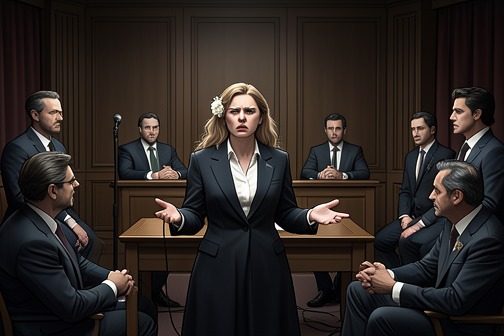
The Taochi audition and casting event is the first clear professional breakthrough in [Shen Tang](entity:character-recall-character-304bad59fb17)’s renewed acting career. Although she is still burdened by the reputation of a scandal-prone Z-list celebrity, her performance transforms the audition room: a panel that initially appears perfunctory becomes attentive once she convincingly inhabits Taochi’s emotional crisis. The event therefore shifts Shen Tang from an actress defined by online rumor and marginal status toward one recognized for actual ability, culminating in her acceptance and preparation to enter the production.
## Circumstances and Stakes
Shen Tang approaches the audition against a difficult professional background. In her current life she remains a Z-list celebrity, but unlike her past life she has become an “ever-trending queen of scandals,” surrounded by accusations and hostile epithets such as “loose tea bitch,” “plastic surgery freak,” “compensation scammer,” and “troublemaker.” Her company’s public-relations team repeatedly pairs her name with male celebrities to generate attention, turning her into a figure that other people in the entertainment industry avoid. Because of this accumulated reputation, the audition is not merely a chance to obtain a role; it tests whether her work can be separated from the public persona manufactured around her.
The role available to her is the second female lead, Taochi. Shen Tang is nervous because five people sit in the audition room and she does not know which of them is connected to Huo Yingying. Huo Yingying has assured her that acting skill is what matters, but Shen Tang remains uncertain whether the other panelists will judge her by the same standard. The scene thus places professional evaluation beside the machinery of celebrity gossip: the panel must decide whether the woman associated with constant scandal can become a specific fictional character.
## The Audition Scene
When her turn arrives, Shen Tang enters the room, introduces herself, and identifies Taochi as the role she is auditioning for. The panel assigns her a precise scene: Taochi discovers that Prince Jin helped her father destroy evidence. This prompt gives the performance a sharply defined emotional circumstance, requiring Shen Tang to play not generic sadness or anger but the shock of learning that family loyalty, political wrongdoing, and personal trust are entangled.
Shen Tang closes her eyes. When she opens them, her expression and posture have changed so completely that she appears to have become Taochi. The transformation is visible in the staging of the scene: the actress first stands before the panel as Shen Tang, then uses a brief physical reset to cross into the role. The panelists’ initially perfunctory expressions become serious as they watch. Her success does not depend on an elaborate explanation of the character; it is demonstrated through the controlled alteration of expression and bearing.
After completing the scene, Shen Tang bows and thanks the panel. The evaluators look at one another, write in their notebooks, and tell her to return home and wait for notice. Their response remains formally restrained, but the change in their attention supplies the event’s decisive value shift. She entered fearing that her reputation might eclipse her craft; she leaves with concrete evidence that her acting has made the panel reassess her.
## Casting and Immediate Aftermath
The result arrives later that night by text message. Shen Tang is extremely excited because, in her previous life, she had never played a second female lead. The casting decision therefore carries a personal dimension beyond employment: it gives her access to a level of role and recognition that had been unavailable to her before. Her excitement is strong enough that she cannot sleep, and she repeatedly reviews the densely written character background she has prepared.
Rather than treating the notification as the end of the event, Shen Tang immediately converts success into preparation. She gets up to pack for the production, which is scheduled to begin in a few days. Because the set is closed and she will not be able to leave midway through filming, she brings extensive supplies and fills three suitcases before dawn. The physical excess of the luggage reflects the seriousness with which she now approaches the opportunity: a formerly marginal actress is preparing not for a brief appearance but for sustained participation in a demanding production.
## Career and Narrative Significance
The audition separates Shen Tang’s public identity from her working identity without pretending that the separation is easy. Her online image has been assembled through rumor, opportunistic publicity, and repeated association with male performers, whereas the audition requires a single, verifiable act: she must perform Taochi’s discovery of a grave betrayal. The panel’s altered attention shows the first institutional recognition that she can offer something other than publicity value.
The event also establishes acting as a form of disciplined transformation rather than passive fortune. Shen Tang is nervous, waits through formal uncertainty, and receives no immediate reassurance when she exits the room. Nevertheless, the performance itself produces the reversal. Her closed eyes, changed posture, and altered expression become the practical means by which she claims a new professional position. Casting Taochi consequently functions as both an opportunity and a test: it rewards skill in the present while opening a path beyond the scandal identity that had previously dominated her career.
In the wider pattern of Shen Tang’s life, the audition’s importance is heightened by its contrast with other public performances. She is surrounded elsewhere by livestream personas, gaming hostility, family appearances, and entertainment-industry spectacle, but the audition offers a setting in which attention can be earned through craft. The role of Taochi is thus the first major proof that Shen Tang’s future need not be governed entirely by the reputation attached to her name.
Event 7
“Shen Tang Is Kept by an Old Man” Rumor Scandal

The [“Shen Tang Is Kept by an Old Man” Rumor Scandal](entity:event-recall-event-shen-tang-30c4aca3f2dd) is a media-driven reputational crisis built almost entirely from a single leak and hearsay. While [Shen Tang](entity:character-recall-character-304bad59fb17) is occupied filming and cannot follow the internet, the allegation spreads across [Weibo](entity:organization-recall-organization-1ca8ba135a79) and repeatedly returns to the hot-search rankings. Her response combines public defiance with legal action: she rejects the rumor, warns that dissemination carries legal liability, and asks [Assistant Cen (Contract Affairs)](entity:character-recall-character-76a4b1d0c863) to have [Gu Group](entity:organization-recall-organization-gu-group-f1780bf588d6)’s legal department pursue the people responsible. The scandal therefore becomes more than another piece of entertainment gossip. It demonstrates how Shen Tang’s established scandal persona makes an implausible accusation easy to believe, while [Gu Huaian](entity:character-recall-character-gu-huaian-d59baed269ab)’s intervention quietly reveals the seriousness with which he regards her.
## Causes and Media Environment
The rumor emerges within a public image already shaped by relentless scandal. Shen Tang is a Z-list celebrity whose company has used her notoriety as a commercial resource, pairing her indiscriminately with male celebrities to ride their coattails. Online audiences know her through hostile labels and never-ending allegations, so the claim that she is being supported by an older man does not arrive in a neutral information environment. It is absorbed into a pre-existing narrative in which Shen Tang is treated as a convenient source of controversy rather than as a person entitled to evidence or privacy.
The immediate source is notably weak. When Shen Tang eventually investigates, she finds that the story came from one person’s leak and had no basis beyond hearsay. Yet the absence of proof does not prevent circulation. The rumor is repeatedly restored to the hot searches even after Gu Huaian suppresses it, showing that online visibility is not simply a reflection of public interest but a mechanism that can reproduce an allegation after attempts to remove it. Shen Tang’s experience illustrates the logic of media eventization: a fragment, once ranked and repeated, acquires the appearance of established fact through sheer persistence.
## Shen Tang’s Delayed Discovery
The filming environment temporarily separates Shen Tang from the information system attacking her. The director has expressly prohibited news about the production from leaking, and mobile phones are generally forbidden during filming except in special circumstances. As a result, Shen Tang does not know that the internet is claiming she is being kept by an old man. [Qi Yue](entity:character-recall-character-edd6cd3ec7b0), [Huo Yingying (Island Show Guest)](entity:character-recall-character-5058e6eaa55b), and others discover the story and become worried when they cannot reach her, while Huo Yingying is also unable to contact her cousin.
The delay gives the rumor time to circulate without her participation. When Shen Tang finally opens Weibo, her phone freezes under a flood of messages marked “99+,” and she avoids searching through the abuse. This moment connects the scandal to her broader “[Trending-Topic Magnetism](entity:concept-recall-concept-202a5998f5d3)”: even before she reads the allegation, the platform’s volume and interface turn public hostility into a physical presence pressing against her device. The same pattern has appeared before, when logging into Weibo immediately places her in the hot-search rankings, and it will recur whenever an incident involving her is recorded, reported, or speculated about online.
## Public Response and Legal Counterattack
Shen Tang does not privately apologize, plead for sympathy, or attempt to add Gu Huaian back as a way of explaining herself. After considering the matter, she contacts Assistant Cen (Contract Affairs) and asks Gu Group’s legal department to prosecute the rumor-spreaders. Her calculation is practical as well as defensive: the legal assistance costs her nothing, and a formal response gives the allegation consequences beyond the unstable arena of online argument.
She also answers publicly through her verified Weibo account, writing, “I heard I was being kept by an old man? ps: Spreading rumors comes with legal liability.” The wording refuses the rumor’s moral framing. Rather than accepting the premise and arguing over whether she appears sufficiently innocent, Shen Tang converts the accusation into a legal question: who circulated it, and what liability follows? She ignores comments insisting that the allegation must be true simply because she denies it, recognizing that some commenters are seeking emotional release rather than evidence.
Assistant Cen’s response is unusually fast. He explains that Gu Huaian had already urged action and tells Shen Tang to leave the matter to him while focusing on filming. The speed matters because it clarifies that Gu Huaian did not merely react after the scandal had become impossible to ignore; he had personally instructed Gu Group’s legal team to prioritize it. The intervention is also institutionally substantial. Big-name accounts that had spread the story, along with netizens whose comments were especially malicious, receive lawyer letters ordering them to apologize and delete their posts or face lawsuits.
At first, some observers treat the letters as another entertainment-industry performance, since legal notices are often used theatrically. More perceptive users identify the lawyers as belonging to Gu Group and quickly retract their posts. Gu Group’s legal team is known as exceptionally capable and undefeated, so the letters carry a credible threat rather than a symbolic warning. The rumor thus collapses not because the online crowd suddenly becomes fair-minded, but because a powerful legal institution changes the cost of continuing to repeat it.
## Recurring Scandal and Narrative Consequences
The rumor is one instance in a larger cycle in which Shen Tang’s visibility is produced through accusation, reaction, and renewed ranking. Her company previously treated controversy as an asset, and even hostile attention can increase traffic and commercial value. The same attention economy appears in her livestream work: she maintains a constant professional smile while viewers insult her, knowing that the broadcast’s popularity and the company split can still generate income. In this environment, scandal is both punishment and currency. Shen Tang is harmed by the public narrative, yet the machinery that harms her also treats her notoriety as labor that can be monetized.
The scandal also foreshadows later hot-search episodes. News of Shen Tang and [Shen Xiuran](entity:character-recall-character-shen-xiuran-97717e92afb8)’s supposed late-night private meeting appears in multiple rankings; an ambulance spotted by paparazzi produces wild speculation about who has been injured; and a passerby’s supermarket video makes Shen Tang trend because viewers recognize her foul language rather than her partially masked face. These episodes repeat the same structure: incomplete material becomes a public narrative, the platform rewards circulation, and Shen Tang must decide whether to perform, ignore, clarify, or fight. The old-man rumor is therefore not an isolated misunderstanding but a defining example of the visibility that follows her.
## Significance for Shen Tang and Gu Huaian
The scandal sharpens the contradiction at the center of Shen Tang’s marriage arrangement. Their marriage agreement requires only occasional family dinners and the appearance of a loving couple, while promising her a monthly payment of five million and a settlement of two hundred million when the two-year term ends. Shen Tang therefore initially treats Gu Huaian as a contractual husband whose personal concern should not matter to her. Yet his decision to redirect Gu Group’s top legal team toward her defense makes his investment unmistakable, leaving her unable to describe her own feelings clearly.
The public crisis consequently becomes a private turning point. Shen Tang’s own response is direct and self-protective, but Gu Huaian’s behind-the-scenes action supplies a different kind of protection: not a romantic display before an audience, but the disciplined use of institutional power to stop the circulation of a lie. The contrast between her public warning and his prior legal instruction deepens their relationship while preserving the uncertainty of their contractual arrangement. At the same time, the event confirms that Shen Tang’s greatest vulnerability is not the truth of any particular allegation. It is the speed with which platforms, publicity teams, paparazzi, and audiences can transform an unsupported fragment into a socially actionable identity.
Event 8
Shen Xiuran深夜私会照片风波

The [Shen Xiuran](entity:character-recall-character-shen-xiuran-97717e92afb8) Late-Night Private-Meeting Photo Scandal is a media-driven misunderstanding in which photographs of [Shen Tang](entity:character-recall-character-304bad59fb17) and Shen Xiuran are presented as evidence of an intimate meeting. The images place Shen Tang inside the entertainment industry’s machinery of speculation, but the episode ultimately gives her control over the narrative: she investigates the leak, confronts [Li Xing](entity:character-recall-character-li-xing-dba5b2d212f2), and releases an audio recording that destroys Li Xing’s public credibility.
## Causes and Background
The immediate trigger is a set of photographs taken in a hallway after Shen Tang and Shen Xiuran had spoken. The picture showed Shen Xiuran with his head lowered and Shen Tang with her head slightly raised, a composition that looked unusually picturesque even though Shen Tang knew the conversation had not been romantic. Its visual arrangement supplied the appearance of intimacy without supplying the context needed to understand what had actually happened.
The surrounding industry made such a misreading especially potent. Shen Tang was already a low-status celebrity whose online reputation was dominated by scandal. Her company’s public-relations team had previously paired her with nearly every male celebrity she had worked with in order to exploit attention around her, leaving her branded by recurring insults and treated as a contaminating presence whom others avoided. The new photographs therefore did not arrive in a neutral environment: they entered an audience already trained to read Shen Tang through rumor and to treat any male association as marketable controversy.
## Public Circulation and Escalation
The photographs quickly reached [Weibo](entity:organization-recall-organization-1ca8ba135a79)’s hot-search rankings. When Shen Tang checked the platform, two prominent entries focused on the alleged meeting: one described an award-winning actor’s late-night private meeting with an actress, while another suggested that Shen Xiuran and Shen Tang’s relationship had been exposed. The images did not merely report a conversation; their angle and framing supplied a miniature romance plot for viewers to complete themselves.
The next morning, the atmosphere around Shen Tang changed. People looked at her with mockery, gossip, disbelief, and even jealousy, and Li Xing quietly asked whether Shen Tang and Shen Xiuran were together after seeing the online photographs. Shen Tang then contacted [Gu Huaian](entity:character-recall-character-gu-huaian-d59baed269ab) by video call, and he directed her to inspect the hot searches. The episode thus moved through several layers of reception at once: private acquaintances treated the rumor as socially meaningful, while the platform converted it into a public spectacle.
The leak did not stop with one image. More photographs appeared from difficult angles, with portions that could not be shown mosaicked out while Shen Tang’s face remained clearly visible. The selective editing increased the impression that the material had been prepared for circulation rather than casually captured. Shen Tang paid closer attention and began to suspect Li Xing. When she went to Li Xing’s room and asked directly whether Li Xing had been responsible for the photograph, Li Xing denied understanding the accusation and insisted that evidence was required.
## Shen Tang’s Counterattack
Shen Tang did not immediately reveal the audio recording she possessed. Instead, with the director’s consent, she sent the earlier recording to the legal department of [Gu Group](entity:organization-recall-organization-gu-group-f1780bf588d6) and challenged Li Xing publicly on Weibo, asking Li Xing to explain the photographs. This two-track response combined institutional protection with public pressure. The accusation made Li Xing answerable before an audience, while the recording preserved a stronger form of proof for a later stage.
Li Xing attempted to shift responsibility onto her assistant. That night, the assistant admitted online that she had taken the photographs casually and claimed that the images might have leaked accidentally when the assistant’s phone was sent for repair. The explanation left Shen Tang unconvinced, and Li Xing’s assistant’s growing nervousness reinforced the appearance that the public confession was a protective maneuver rather than a complete account.
The attempted diversion did not end the matter. Once Li Xing began to relax under the assumption that Shen Tang had no further move, Shen Tang released the audio recording. Li Xing’s Weibo account was overwhelmed by demands for an explanation. Shen Tang’s timing was decisive: she allowed the denial and the assistant’s implausible account to establish a false sense of safety, then introduced evidence capable of reversing the public reading of the scandal.
## Consequences and Aftermath
The immediate result was the collapse of Li Xing’s public image. Potential collaborators began reconsidering work with her because they feared being betrayed or exposed in the same way. Shen Tang regarded this as an appropriate punishment, particularly because Li Xing had initiated a malicious episode and Shen Tang herself was familiar with the damage that entertainment-industry rumors could cause. The scandal was not treated as a harmless misunderstanding; it became an example of how calculated publicity can impose professional consequences.
The event also deepened the contrast between Shen Tang’s public image and her actual conduct. She was widely known as a source of controversy, yet here she was the person who recognized the mechanics of a manufactured rumor and used those mechanics against its creator. Her experience with online abuse made her neither passive nor naive. Instead, it gave her an unusually practical understanding of how timing, partial images, denial, and evidence shaped public judgment.
The broader pattern of platform-mediated attention recurs elsewhere in Shen Tang’s life. Her phone freezes under the volume of Weibo messages when she appears on a hot search; a supermarket video later makes her trend because viewers recognize her foul language rather than her masked face; and even ordinary gaming interactions become public or social performances. Against that background, the Shen Xiuran scandal is not an isolated romantic rumor but a concentrated demonstration of Shen Tang’s trending-topic magnetism: any image involving her can be detached from circumstance, circulated as a commodity, and made to carry a story that the image itself cannot prove.
## Narrative Significance
The scandal’s central reversal lies in the difference between photographic appearance and lived reality. The hallway image is persuasive precisely because it is aesthetically coherent: lowered head, raised head, and carefully chosen framing make the exchange look intimate. Yet the apparently decisive evidence is only a fragment. The episode therefore treats visual media as powerful but incomplete, showing how an image can manufacture certainty while withholding the facts that would correct it.
It also establishes Shen Tang’s method of resisting reputational control. Rather than relying on an immediate denial, she observes the leak, identifies the likely source, secures legal support, confronts the suspected instigator, and withholds the decisive recording until the opposing explanation has been publicly tested. The outcome is not simply that a rumor fades. The rumor is made to reveal its producer, and the person who tried to exploit Shen Tang’s scandal-prone reputation loses the professional standing that the campaign was meant to protect.
Event 9
Xu Jiaojiao重生身份揭示
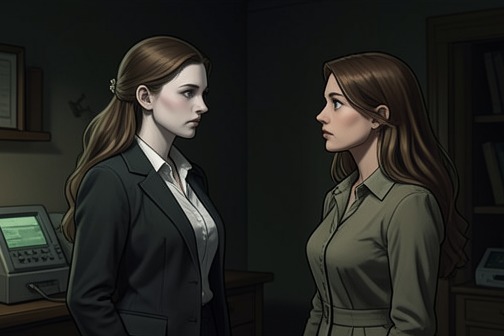
[Xu Jiaojiao](entity:character-recall-character-d7ca72f33133)'s [Rebirth](entity:concept-recall-concept-4f29df4cef21) Identity Revelation is the turning point at which Xu Jiaojiao's strange intensity toward [Shen Tang](entity:character-recall-character-304bad59fb17) becomes intelligible. What first appears to be fanatic admiration is revealed as the emotional residue of another life: Shen Tang once saved Xu Jiaojiao from exploitation, while Xu Jiaojiao later joined Shen Tang's enemies and helped harm the very person she regarded as a benefactor. By admitting her reincarnation and exposing the history behind her attachment, Xu Jiaojiao converts suspicion into shared knowledge and turns a damaged friendship into an opportunity for atonement.
## Suspicion and Direct Confrontation
Shen Tang notices that Xu JiaoJiao does not look at her with ordinary affection. The gaze seems almost fanatical, leaving Shen Tang uneasy rather than flattered. After trying to dismiss the impression as a misunderstanding, she decides that continued speculation is pointless and goes directly to Xu JiaoJiao's door. The knock and the greeting that follows establish the revelation as an intimate confrontation rather than a public discovery: Shen Tang seeks an explanation face to face, and Xu JiaoJiao must answer the person whose presence has unsettled her.
The scene's first value shift is from uncertainty to deliberate inquiry. Shen Tang does not yet know whether Xu JiaoJiao is an ally, an admirer, or a threat, but she refuses to let the ambiguity grow unchecked. Her decision to ask directly gives the event its investigative structure and makes the eventual disclosure a consequence of Shen Tang's agency. It also prepares the larger metaphysical question of the novel, in which identity cannot be explained solely by the visible life currently being lived.
## Xu JiaoJiao's Reincarnation Confession
Xu JiaoJiao initially doubts that Shen Tang will believe her, then states that she has reincarnated. She is not entirely certain whether the experience should be called reincarnation or an unusually vivid dream; its reality was too complete to dismiss, yet she lacks absolute certainty about the mechanism. Shen Tang accepts the claim without ridicule. Because Shen Tang herself has crossed into a book, another person's return from a previous life does not seem impossible to her.
Shen Tang also recognizes the practical importance of the disclosure. She cannot tell whether Xu JiaoJiao reincarnated in the first cycle, before Shen Tang crossed into the book, or in the second cycle, after that crossing. If Xu JiaoJiao's memories belong to the later cycle, they might contain knowledge of what is still to come. The confession therefore carries two simultaneous meanings: it is an emotional explanation for Xu JiaoJiao's behavior and a possible source of information about the future. The event expands the story's reality beyond a single linear timeline, placing Shen Tang's transmigration beside Xu JiaoJiao's uncertain rebirth.
## The Previous Life and the Rescue
In her previous life, Xu JiaoJiao was a minor celebrity without resources or influential connections. After acting in a drama, she gained popularity, but that success exposed her to a more dangerous professional environment. An investor took an interest in her, and her company began sending her to drink and entertain clients. Xu JiaoJiao tried to maintain her principles, yet she could not prevent men from taking liberties with her.
The crisis reaches its most immediate point when she has drunk enough to suffer nausea, stomach cramps, and dizziness, while a man attempts to force more alcohol on her. Shen Tang intervenes. In her muddled state, Xu JiaoJiao sees Shen Tang beat the man and take her to the hospital, where her stomach is pumped. To Shen Tang, the intervention may have seemed like a small act of protection; to Xu JiaoJiao, it becomes life-changing. She believes that without Shen Tang, much worse could have happened, consequences she cannot bear to imagine.
That memory explains why Xu JiaoJiao's present attachment is so intense. Shen Tang did not merely assist her career or offer casual companionship. In Xu JiaoJiao's recollection, Shen Tang arrived at the moment when her dignity and safety were being threatened, acted decisively, and stayed with her through medical treatment. Gratitude, dependence, admiration, and emotional indebtedness become fused together, so that what Shen Tang reads as fanaticism is actually the afterimage of a rescue that defined Xu JiaoJiao's life.
## Betrayal, Guilt, and the Attempt at Redemption
When Shen Tang asks whether the rescue is the reason Xu JiaoJiao came to like her, Xu JiaoJiao confirms it. She remembers that they later became best friends: she learned Shen Tang's preferences, while Shen Tang helped clear a path for her. The recollection makes Xu JiaoJiao cry, and she explains that she is relieved. Her relief is not merely happiness at seeing Shen Tang again. It comes from realizing that the catastrophe of the previous life has not yet occurred and that she still has the chance to begin again.
Xu JiaoJiao's inner confession reveals the darker half of the memory. In the previous life, she became blinded and plotted with Shen Tang's enemies to harm Shen Tang. She remembers a specific moment in which Shen Tang tightly gripped a wine glass and sincerely asked whether Xu JiaoJiao really wanted her to drink it. After Xu JiaoJiao nodded, Shen Tang drank everything in one gulp, even as a tear slipped from the corner of her eye. Although nothing ultimately happened to Shen Tang, Xu JiaoJiao could not forgive herself, and the friendship ended.
The revelation therefore does not present rebirth as a clean escape from the past. Xu JiaoJiao carries both the memory of being saved and the memory of betraying her savior. Her embrace of Shen Tang becomes a physical pledge that, in this life, she will redeem herself properly. The act of holding on contrasts with the earlier separation: the previous life culminated in a friendship broken by complicity, while the present life begins its repair through confession, remorse, and a decision to act differently before the fatal pattern repeats.
## Narrative Significance and Aftermath
The event changes Shen Tang's understanding of Xu JiaoJiao without resolving every uncertainty about rebirth. The exact cycle in which Xu JiaoJiao returned remains unclear, and Xu JiaoJiao herself cannot fully distinguish reincarnation from a dream. Yet the emotional truth of her memories is sufficient to explain her behavior. Shen Tang's willingness to believe her creates a rare point of solidarity between two people whose lives are shaped by departures from ordinary reality: Shen Tang has entered a fictional world, while Xu JiaoJiao remembers another life within it.
The disclosure also establishes accountability as the meaningful consequence of supernatural second chances. Xu JiaoJiao is not absolved simply because she has returned. She names the rescue, remembers the betrayal, accepts that the friendship ended because of her actions, and commits herself to making amends. The past remains active, but it no longer has to dictate the future. Once Shen Tang understands the source of her doubts, she sleeps well that night, suggesting that knowledge—not a magical erasure of danger—has restored immediate trust and emotional calm.
Placed near the end of filming, when the production is approaching its wrap, the revelation arrives at a threshold. One phase of the characters' shared life is closing just as Xu JiaoJiao's hidden history opens. Its function is consequently larger than a twist: it reframes a relationship, confirms that the novel's temporal order is unstable, and turns a potentially threatening intensity into a moral promise. Xu JiaoJiao's rebirth matters because it gives her another life, but the scene insists that the real test of rebirth is whether remembered harm can produce changed conduct.
Event 10
Gu Qing'an恋人死亡悲剧

[Gu Qing'an](entity:character-recall-character-gu-qing-an-a61c24864d75)'s lover's death tragedy is the decisive wound in Gu Qing'an's history: a love that began across class and family opposition ends in a roadside act of protection, killing both the young man and his grandmother and leaving Gu Qing'an to carry a future that can no longer be shared. Recounted to [Shen Tang](entity:character-recall-character-304bad59fb17) as a buried family history, the tragedy transforms a seemingly conventional romance between a wealthy woman and a self-made student into an account of exploitation, sacrifice, bereavement, and the long afterlife of trauma.
## Background and Relationship
Gu Qing'an had been strong-willed and overbearing since childhood, a personality that made her unpopular with many people even as she grew into adulthood. Her family's vast business empire meant that its daughters did not need political marriages; they were free to marry people they genuinely liked. That freedom enabled Gu Qing'an's relationship with a frugal, hardworking, high-achieving student who had rescued her after supposed friends drugged and took advantage of her. Continued contact gradually became affection, but the relationship initially met resistance from many people, including [Gu Huaian](entity:character-recall-character-gu-huaian-d59baed269ab), who suspected that the student might be approaching his sister for ulterior motives.
The couple's social difference gave the relationship the shape of a wealthy heiress falling for a self-made man, yet the narrative refuses to treat that premise as a simple romantic fantasy. In their fourth year of college, Gu Qing'an and her boyfriend promised to return together to his hometown after graduation. He came from a mountain village, had been raised by his grandmother, and was the only university student the village had produced. Their shared plan was not merely a visit: it was a commitment to enter the difficult circumstances of his family life together.
## The Roadside Catastrophe
When the couple reached the village, they discovered that the grandmother was paralyzed in bed, covered in bedsores, starving, and reduced to skin and bones. The boyfriend then learned that the money he had sent home each month had been embezzled by a neighboring family. The revelation converted private romantic commitment into an immediate moral crisis. Gu Qing'an and the man decided to take the grandmother with them and care for her themselves, while the grandmother resisted because she feared becoming a burden. Her objections could not overturn their decision to protect her.
The attempt to leave triggered the fatal retaliation. The neighbor's son, angry that the grandmother's removal would cut off his source of money, drove a van into the departing group. The boyfriend held Gu Qing'an tightly in his arms and used his own body to shield her. The protection succeeded only in the narrowest and most devastating sense: Gu Qing'an survived, while he and his grandmother died at the scene. The act gives the tragedy its central reversal. A relationship once questioned as potentially exploitative is sealed by a sacrifice in which the supposedly poorer partner gives his life to preserve Gu Qing'an's.
## Aftermath and Concealed Grief
The family later told Shen Tang that the people responsible had been punished, but punishment did not restore the dead or undo the damage done to Gu Qing'an. She adopted an outwardly unconcerned attitude while remaining deeply sensitive beneath it. The account specifically asks that the tragedy not be mentioned in front of her, indicating that her composure is a defensive surface rather than evidence that the loss has ceased to matter. After giving birth, she buried herself in work, turning productivity into a means of living around grief rather than resolving it.
Gu Qing'an also spent years overseas and did not return until she heard that Gu Huaian was getting married. Only then did she transfer her work back to China. Her absence therefore functions as both a geographical fact and a form of emotional distance: the life she once imagined with her lover has been replaced by professional movement and deliberate separation from the family scene where the loss remains legible. The tragedy continues to organize her choices long after the immediate violence has ended.
## The Children and the Tragedy's Meaning
The dead man left behind unborn children, [Gu Anran and Gu Wuyang](entity:relation-recall-relation-a6de1e4d5334). Their names preserve Gu Qing'an's greatest remaining wish: that both children would be safe and sound. They are not only names for children but also a memorial structure, translating a destroyed future into a continuing maternal hope. The children embody the life the couple intended to build and the permanent absence at its center.
Shen Tang hears the story with shock and regret. What she had initially recognized as a familiar rich-woman-and-self-made-man romance becomes an old wound that she feels she has intruded upon. Her tears mark the event's movement from family exposition into shared emotional experience, while Gu Huaian's warning protects Gu Qing'an from having the wound reopened publicly. The tragedy also unsettles Shen Tang's own understanding of love. She recognizes that loving people can be separated forever and begins to fear that, if she is ever transported back to her original world, she too might be divided from her lover by two worlds. Her immediate reaction is defensive: she resolves to sleep with people but not fall in love, a distinction that exposes how powerfully the tragedy has altered the emotional atmosphere around her.
## Narrative Significance
The event functions as a trauma narrative whose decisive violence arrives only after a period of delayed explanation. Gu Qing'an's difficult personality, work-centered life, overseas absence, and guarded indifference acquire retrospective meaning once the concealed loss is disclosed. The story's structure makes witnessing itself consequential: Shen Tang's curiosity first crosses a boundary, then becomes an act of sorrowful recognition, and finally changes her view of intimacy and separation.
The tragedy also links love to impermanence without reducing the dead to a plot device. The boyfriend's final act establishes the sincerity of his devotion, while the grandmother's death exposes how economic exploitation and family vulnerability can turn ordinary dependence into lethal danger. Gu Qing'an survives not because the relationship was protected from conflict, but because another person accepted death in the moment conflict became violence. That survival carries an obligation as well as grief: to remember the lost, protect the children who represent their unfinished future, and continue living despite the permanence of what cannot be recovered.
Event 11
Set Cosmetics and Costume Sabotage
[Set Cosmetics and Costume Sabotage](entity:event-recall-event-d920b3c8a469) is a backstage attack directed at [Shen Tang](entity:character-recall-character-304bad59fb17) near the end of filming. What first appears to be routine production trouble becomes a deliberate attempt to contaminate her makeup and compromise her costume, shifting the set from a workplace into an unsafe investigative scene. Shen Tang’s caution prevents the sabotage from becoming a bodily injury, while the discovery of the materials, the limits of the surveillance footage, and the arrival of Xiao Yu widen the incident from a private threat into a matter involving the police and [Gu Huaian](entity:character-recall-character-gu-huaian-d59baed269ab)’s protective intervention.
## Causes and Background
The incident occurs as filming is approaching its conclusion. Several smaller disturbances have already taken place, involving tampered accessories and makeup items, but none has yet produced a major consequence. That pattern matters: the sabotage is not an isolated accident but an escalation within an atmosphere of repeated interference. Shen Tang is not the female lead, which makes the concentration of trouble around her especially unsettling; her own disbelief reflects the mismatch between her relatively minor position on the production and the seriousness of the risks she is being made to face.
Rather than continue treating the irregularities as inconveniences, Shen Tang stops using the suspicious makeup and installs a small camera in her makeup room. The camera changes the conditions of the threat. The saboteur had relied on the privacy and blind spots of the backstage area, but Shen Tang’s precaution creates a record of the intrusion and allows the hidden action to be reconstructed. Her vigilance is therefore not merely defensive characterization: it is the practical cause of the attack’s exposure.
## What Happens on the Set
One morning, Shen Tang checks the materials before beginning makeup and costume preparation, as she has recently made a habit of doing. She discovers that a man wearing black clothing and a duck-bill cap has pried open the lock and entered the room. The footage captures him adding something to the makeup and then pulling apart threads in the costume. The damage to the clothing is intentionally subtle. The costume still looks usable, but even slight force could make it rip, turning an apparently ordinary garment into a concealed hazard during performance.
The makeup presents a second and more direct danger. After Shen Tang reports the incident, [Director Huo](entity:character-recall-character-director-huo-64212f701c4f) orders an investigation. The available footage shows only half of the intruder’s chin because the duck-bill cap and dark clothing conceal most of his face. The set’s surveillance system also contains numerous blind spots, and Director Huo concludes that the person was probably an outsider who knew enough about the local camera arrangement to move through it effectively. The combination of disguise, limited visibility, and familiarity with the surveillance layout makes the sabotage appear planned rather than impulsive.
Shen Tang calls the police, who take the remaining makeup for testing. The eventual results identify glue and jy among the added substances. The jy has been mixed into the lotion, where it is difficult to notice without close inspection. This finding gives physical confirmation to what had initially been only suspicion: the makeup room was not simply disordered, and the products were not harmlessly tampered with. Shen Tang’s inspection before use is what keeps the contamination from reaching her body.
## Participants and Immediate Response
Director Huo treats Shen Tang as the victim rather than as a source of disruption and instructs the crew to investigate. Her response is correspondingly direct: she reports the damaged costume and compromised makeup despite her reluctance to disturb the director, then involves the police instead of allowing the matter to disappear as another minor production inconvenience. The scene’s central value shift is from presumed workplace safety to active danger, followed by a partial recovery of control through evidence preservation and official testing.
The unidentified intruder remains difficult to locate. The surveillance footage is insufficient for a clear identification, and the person’s apparent knowledge of the set’s blind spots suggests that finding him will not be easy. The uncertainty leaves the threat unresolved even after the immediate danger has passed. Shen Tang knows what was done to the materials, but not who commissioned it or what the saboteur intended beyond creating a harmful or humiliating failure.
Gu Huaian learns of the incident and immediately sends his bodyguard Xiao Yu. Shen Tang presents Xiao Yu to others as her new assistant, converting private protection into an ordinary professional arrangement that can function on the set without openly dramatizing her vulnerability. Gu Huaian also promises to discover whom the person was working for. His response extends the consequences beyond the police investigation: the sabotage becomes a threat to Shen Tang that he personally undertakes to trace.
## Consequences and Aftermath
The incident ends without the major harm that Shen Tang fears, but not without consequences. The costume can no longer safely be worn, because its loosened threads could cause it to tear under minimal force. The makeup is removed for testing, and the discovery of glue and jy establishes that the danger was material and actionable. The production’s earlier minor incidents are retrospectively reclassified as warning signs in a developing pattern of set cosmetics and costume sabotage.
The event also alters Shen Tang’s position within the production. She had hoped that the set would finally be safe, yet the intrusion demonstrates that ordinary assumptions about controlled access cannot protect her. The small camera, her repeated checks, and her refusal to use altered products become the means by which she survives the attack. In place of passive fear, the aftermath produces a more guarded working environment, police involvement, and Xiao Yu’s continued presence as security disguised as assistance.
Shen Tang is disturbed by the perversity of the attack and wants to know what the intruder was trying to accomplish. Gu Huaian’s tense promise to identify the person’s employer acknowledges that the event may have an organized source rather than being the work of an isolated nuisance. The unanswered question of sponsorship preserves the incident’s suspense, while the confirmed contamination supplies a concrete consequence: the threat has crossed from rumor and harassment into a physical assault prepared through everyday production objects.
## Narrative Significance
Set Cosmetics and Costume Sabotage gives material form to the danger surrounding Shen Tang’s public life. Elsewhere, her reputation is repeatedly processed through online attention, hot searches, rumors, and recorded footage; here, the threat begins in the hidden backstage space before potentially becoming visible through an accident, an injury, or a scandal. The set’s makeup and costume are supposed to support performance, but sabotage makes them unreliable props. Their sudden transformation from useful objects into concealed dangers exposes how fragile the boundary is between acting and being targeted.
The event also develops the recurring contrast between performance and reality. Shen Tang is working inside a drama production, while the intruder stages a covert intervention that could force her body into an uncontrolled spectacle. Her response is the opposite kind of performance: she presents Xiao Yu as an assistant, maintaining an ordinary public explanation while privately accepting heightened protection. The incident therefore deepens the book’s pattern of front-stage appearances supported by backstage strategies of surveillance, caution, and alliance.
Most importantly, the sabotage marks Shen Tang’s caution as an active survival skill. She does not defeat the intruder through confrontation; she defeats the plan by inspecting what she is about to use, preserving evidence, and seeking institutional help. The threat remains partially unresolved because the perpetrator is unidentified, but the value shift is decisive: an exposed vulnerability becomes a documented case, and a precarious workplace gains a protective response through the combined actions of Shen Tang, Director Huo, the police, Gu Huaian, and Xiao Yu.
Event 12
Gu Anran遭人贩子绑架未遂
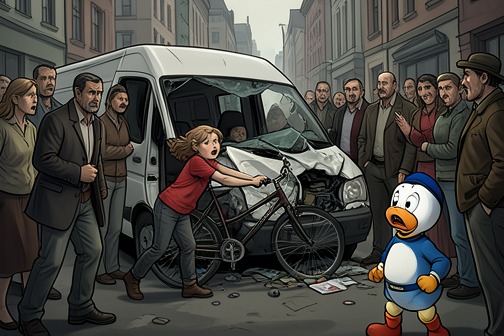
[Gu Anran](entity:character-recall-character-7f6addebbd5c)’s attempted abduction is the sharp reversal at the center of an outing meant to be lighthearted. When Gu Anran is led away in the confusion of buying cotton candy, [Shen Tang](entity:character-recall-character-304bad59fb17) responds with immediate, physical force: she finds the van, smashes it with a shared bicycle, rescues the child, and defeats the traffickers before the police arrive. The incident protects Gu Anran while also exposing how quickly ordinary kindness and public distraction can be exploited.
## Causes and Setting
The incident begins the day after [Gu Qing'an](entity:character-recall-character-gu-qing-an-a61c24864d75) leaves early for work and [Gu Huaian](entity:character-recall-character-gu-huaian-d59baed269ab) is away, leaving the two children without their usual parental supervision. When Gu Anran wakes and discovers that her mother is absent, she is visibly disappointed. Shen Tang tries to repair the mood by offering to take her and Gu Wuyang out, and the children settle on an amusement park. The proposed excursion gives the episode an atmosphere of ordinary family recreation before the danger appears.
Shen Tang and the children change into matching Donald Duck outfits, with their other clothes sent back to [Gu Family Villa](entity:location-recall-location-gu-family-villa-e78be7c86cd6). The costumes make the children conspicuous, a detail that later becomes crucial: a witness is able to identify Gu Anran after seeing that she was led away. At the amusement park, Shen Tang buys cotton candy for both children. While she is paying, Gu Anran disappears, and Gu Wuyang admits that he had been distracted by the cotton candy and had not noticed what happened.
## Abduction and Rescue
Shen Tang does not wait for certainty before acting. She reports the disappearance to the police, questions nearby passersby and shop owners, and asks a security guard to examine surveillance footage. The search produces a usable lead: someone saw an old woman taking Gu Anran away. Shen Tang runs in that direction and finds the woman leading the child toward a van.
The van is close enough to reach but far enough to make delay dangerous. Looking around for something that could stop it, Shen Tang grabs a shared bicycle from the roadside and throws it at the vehicle. The bicycle strikes the van with such force that its windows shatter, producing a sudden shock that silences the surrounding area. Shen Tang then crosses the remaining distance in three steps and takes Gu Anran’s hand. At that moment, Gu Anran is still confused and addresses Shen Tang as her sister, not yet understanding how close she has come to being taken away.
The old woman reveals the criminal nature of the scene when she pulls at Gu Anran and calls toward the van for the others to act. Several muscular, tattooed men rush forward to seize the girl. Passersby retreat because they fear becoming involved, although some kindhearted witnesses call the police. Shen Tang pries the old woman’s hand away and places herself between the child and the attackers. She condemns the attempted snatching in broad daylight, but the men do not answer; they rush forward and try to fight.
The confrontation reverses the crowd’s expectations. The onlookers initially expect Shen Tang to be overwhelmed by several large men. Instead, the attackers prove less formidable than their appearance suggests, and Shen Tang beats them so decisively that the frightened crowd regains its courage. She eventually pins down the ringleader and strikes him repeatedly until he cries for her to stop and begs for mercy. Her strength is not presented as abstract bravery: it is the concrete means by which Gu Anran is kept out of the van and returned to safety.
## Police Confusion and Immediate Consequences
The traffickers attempt to manipulate the arrival of the police by crying for help and presenting themselves as victims. Their performance briefly makes it difficult to tell who the real trafficker is. Shen Tang releases the ringleader only after the police arrive, then recounts the sequence of events in an orderly manner. Her controlled account clarifies the scene after the criminals have tried to turn its appearance against her.
Gu Wuyang returns with the security guard and runs to Gu Anran, embracing her and crying that she frightened him terribly. The emotional aftermath makes clear that the danger was not merely a comic fight in a public place: the children understand that Gu Anran could have vanished, and the family’s relief depends on the fact that Shen Tang recognized the threat in time.
The amusement-park plan is abandoned. Instead, Shen Tang and the two children spend half a day at the police station listening to anti-fraud lectures. The change from entertainment to instruction is a direct consequence of the attempted abduction. The children lose the outing they wanted, but they gain practical knowledge intended to keep them from being easily deceived in the future.
## Shen Tang’s Protective Lesson
Shen Tang does not treat Gu Anran’s kindness as a fault. She explains that there is nothing wrong with being kind, but bad people have many ways to exploit goodwill, and kindness must not become a resource criminals can use to cause harm. The lesson distinguishes moral generosity from careless trust. Gu Anran appears to understand at least part of it, while the police lecture gives the warning a broader, institutional form.
The episode therefore defines Shen Tang’s protection in two stages. First, she acts with overwhelming speed and force when the child is in immediate danger. Second, once the immediate threat has ended, she turns the frightening experience into instruction. Rescue is not complete merely because the traffickers are defeated; it also requires helping the children recognize the methods by which danger approaches.
## Public Circulation and Narrative Significance
A passerby records the incident as a short video and posts it on [Weibo](entity:organization-recall-organization-1ca8ba135a79). Shen Tang’s rescue consequently escapes the boundaries of the family and the police station. By the following chapter, Shen Tang beating the human traffickers has become a trending topic, and public reaction is divided. Some viewers believe the traffickers deserved to be beaten, even beaten to death, while the spectacle of the fight also makes Shen Tang appear unusually fierce.
The episode’s value shift is stark: a child’s ordinary disappointment becomes excitement about an amusement park, then turns into disappearance, threatened captivity, physical rescue, police confusion, and public notoriety. The broken van window and the matching Donald Duck outfits serve as the scene’s most concrete markers of that reversal: one stops the vehicle, while the other helps strangers identify the missing child. Shen Tang’s action also strengthens her established role as the person who intervenes when vulnerable people are endangered, while the later Weibo circulation converts private protection into a public image that others can debate, praise, or misunderstand.
Event 13
Livestream Filming of the Farming Variety Show

[Livestream Filming of the Farming Variety Show](entity:event-recall-event-6226ee672628) marks the point at which [Shen Tang](entity:character-recall-character-304bad59fb17)’s public image begins to move from manufactured scandal toward observable competence. Before the program, her company’s public-relations team had repeatedly paired her with male celebrities to exploit her coattails, turning her into a figure many people in the entertainment industry avoided. The farming show therefore arrives against a background of calculated publicity and distrust. Its importance lies in the fact that the livestream cannot be sustained by a single polished pose: Shen Tang must work, improvise, cooperate, and remain visible while the audience judges her conduct in real time.
## Invitation and Format
[Pei Kesong](entity:character-recall-character-dc9f03e3c66f) had only recently been hired, so Shen Tang expected that she would have few resources available to her. Instead, Pei Kesong sent her a [WeChat](entity:organization-recall-organization-41b94a06fe44) message that secured a guest appearance on a farming variety show. Filming soon began, giving Shen Tang an opportunity that initially looked like a limited professional assignment but became much more consequential because the program exposed the guests’ ordinary behavior over several days.
The opening task established the show’s central difficulty. The guests were told to prepare a luxurious dinner for themselves, but the ingredients had to be self-provided. The requirement transformed cooking into a problem of acquisition. Shen Tang left after [Ao Ziping](entity:character-recall-character-7b497b30b847) returned to his room and came back carrying rice, vegetables, and eggs, supplying the basic meal through her own initiative rather than waiting for the production team or another guest to solve the problem.
When the other guests came downstairs, Shen Tang met the female lead in person for the first time. The social situation was therefore also part of the recording: professional introductions, unfamiliar group dynamics, and the pressure of being observed were folded into the practical work. Once the rice was cooked, the guests ate voraciously, abandoning even the pretense of restrained table manners for the camera. The scene made hunger and exhaustion more persuasive than an arranged performance, allowing the livestream to register the gap between entertainment-industry presentation and actual labor.
## Work, Food, and Barter
The program soon expanded beyond preparing one meal. Shen Tang’s hands continued moving through farm tasks, and her experience from her previous life made work such as shucking corn and sprinkling water easy for her. Her competence was not presented as a speech or a claim; it appeared through repeated physical actions that could be watched and compared with the guests’ efforts. In the end, a day’s labor completed less than half a day’s assigned tasks, revealing how demanding the work was and how little the guests’ initial expectations matched the reality of farming.
The timing also mattered. It was a busy farming season, and many local families still needed help. The families were willing to provide ingredients rather than money, creating a mutually beneficial exchange: the guests contributed labor, while the farmers supplied food. This arrangement gave the show a practical economic structure instead of reducing rural life to scenery. Shen Tang’s participation connected entertainment labor with agricultural labor, showing that food on the table depended on work that the camera could neither glamorize nor complete quickly.
At one point, Granny smiled and handed over the ceramic basin she was carrying when the guests returned. The gesture condensed the changing relationship between the visitors and the local residents. The basin was an ordinary object, but its transfer acknowledged cooperation rather than celebrity status. Shen Tang’s early rising and willingness to do chores also surprised the other guests, who felt guilty when they saw how much she had undertaken. Their reaction indicates that her conduct altered the group’s moral balance: she was no longer merely another performer awaiting a favorable edit, but the person whose effort made the shared meal and the shared task possible.
The same practical logic continued when the guests went to sell watermelons. Instead of selling all of them, they used some to barter for ingredients. The choice preserved the show’s resource problem while demonstrating a more flexible form of exchange. Shen Tang led the guests away from a simple money transaction and toward negotiation based on what each side possessed. The livestream thus turned scarcity into a visible source of collaboration, and it gave her resourcefulness a public form that could not easily be dismissed as publicity management.
## Public Reversal
The show’s decisive effect came through accumulation rather than one spectacular incident. Shen Tang’s constant activity, early rising, farm experience, and willingness to secure food gradually changed many viewers’ opinions. The narrative emphasizes that pretending can last only so long; it cannot be maintained forever under the pressure of repeated observation. Her professional smile had previously functioned as a shield while commenters scolded her, as though the target of the abuse were someone else. On the farming show, however, the smile was accompanied by visible work, and the audience received conduct that could be tested across time.
The change in public response had measurable social consequences. Shen Tang gained more fans, her fan club grew rapidly, and livestream commenters began speaking up for her. This was not simply a reversal of one rumor. It was a redistribution of attention: the same publicity environment that had once treated her as a malignant presence began to supply recognition based on what viewers had watched her do. The event demonstrates how a platform can magnify hostility, but also how sustained participation can allow an individual to challenge a prefabricated image.
The contrast with the advice that bad publicity is still publicity is especially sharp. Earlier, Shen Tang had been urged not to leave the entertainment path because even negative attention could produce an opportunity. The farming livestream gives that cynical principle a different outcome. Attention alone does not redeem her; the conditions of the show force attention to encounter labor, and labor changes what the attention means. The event therefore converts publicity from an imposed pairing strategy into an earned connection with viewers.
## Departure and Lasting Significance
After several days, the filming period ended and it was time for Shen Tang to leave. Her departure closes the event without suggesting that the entertainment industry’s hostility has vanished. Instead, the lasting consequence is a changed position from which later opportunities become possible. Pei Kesong’s initial message had provided access to the show, but Shen Tang’s conduct supplied the material that transformed access into momentum.
The event also deepens the recurring relationship between Shen Tang and mediated performance. In celebrity publicity, she had been paired with men and treated as a vehicle for attention; in the livestream, she is watched while carrying food, doing chores, farming, negotiating, and sharing meals. The program’s format makes domestic and agricultural labor publicly legible, while Shen Tang’s competence disrupts the assumption that her professional persona is entirely artificial. Even her return to games with [Gu Huaian](entity:character-recall-character-gu-huaian-d59baed269ab) during the period around the show, after several days away from gaming, reinforces the contrast between different kinds of mediated social life: one platform presents her through farm work and collective survival, while another reconnects her with competitive play and familiar relationships.
Livestream Filming of the Farming Variety Show is consequently both a work assignment and a reputation reversal. Its value shift runs from suspicion to credibility, from isolation to collective support, and from attention imposed by public-relations tactics to attention sustained by viewers’ recognition of effort. Shen Tang does not defeat her earlier image through a declaration; she outlasts it through repeated, concrete acts that the audience can see.
Event 14
Human-Trafficking Abduction and Collective Escape
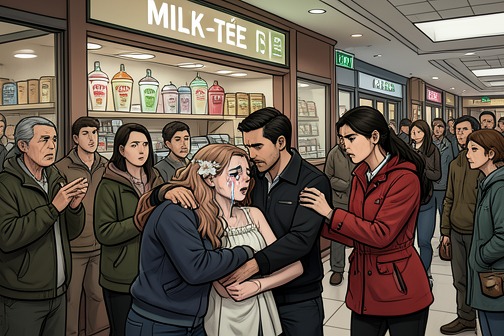
[Human-Trafficking Abduction and Collective Escape](entity:event-recall-event-59e9adc3dd3b) is a concentrated survival and resistance episode: [Shen Tang](entity:character-recall-character-304bad59fb17) is seized in a public place, taken to a concealed warehouse, and held alongside other girls, but refuses to treat captivity as an individual problem. By waking the sleeping victims and asking whether they want to escape, she turns fear into coordinated action. The escape does not erase the violence that produced it—the traffickers pursue the girls and some are injured—but it breaks the captors’ control, brings the victims into contact with the police, and allows the truth of the night to be reconstructed for [Gu Huaian](entity:character-recall-character-gu-huaian-d59baed269ab).
## Abduction and the Hidden Captivity
The crisis begins at a mall, where Shen Tang encounters a commotion near a milk-tea shop. A woman is struggling and crying that she does not know the man restraining her, while he calls her his wife and tries to make concerned bystanders believe that the dispute is merely a domestic quarrel. Shen Tang rushes toward them rather than remaining a spectator. The scene exposes the central danger of the abduction: public appearance is being used as camouflage. The man’s calm, plausible performance disguises coercion, and the woman’s resistance is made to look like a private family conflict.
Shen Tang’s intervention places her directly in the traffickers’ path. At the warehouse, a scar-faced man initially becomes suspicious because her overly compliant attitude does not match the resistance he expects; he wonders whether she is setting a trap. His hesitation lasts only briefly, because the prospect of money and the perceived rarity of finding someone as attractive as Shen Tang outweigh his caution. The detail reveals the commercial logic of the crime: the victims are treated as commodities, while Shen Tang’s appearance is folded into the captors’ calculations of profit and risk.
The warehouse is not presented as an isolated room but as part of a remote environment. When Shen Tang later closes the door and looks through the opposite window, she sees dense woods surrounding the building. The location’s concealment is itself a weapon. Even if the captives manage to leave the room, the forest makes them difficult to find, and the distance from ordinary public life gives the traffickers time to control, intimidate, and relocate their victims.
## Shen Tang Organizes the Escape
The decisive change comes when a disheveled figure smelling strongly of alcohol slips into the room and Shen Tang recognizes an opportunity. After the building grows quiet and the intermittent snoring outside replaces the earlier activity, she wakes the girls one by one and asks whether they want to escape. The victims do not immediately respond. Their silence conveys more than simple indecision: after captivity and fear, even the possibility of freedom has become difficult to believe.
Shen Tang’s action is therefore organizational rather than merely physical. She does not escape alone and leave the others behind. She first creates a shared decision, gathering the girls into the same plan and making their survival interdependent. Her willingness to act gives the group a practical center, while the girls’ later cooperation demonstrates that captivity has not eliminated their ability to choose. The scene’s value shifts from helpless confinement toward collective agency, even though the escape remains precarious.
The group’s temporary relief is shattered when noisy sounds and bright lights appear behind them. The traffickers have discovered the escape, and the girls immediately understand that concealment has failed. Their cry that they must run turns the attempt into a pursuit. The danger is no longer the silent enclosure of the warehouse alone; it is now the open threat of recapture, with the forest and darkness offering both a possible route to safety and another form of exposure.
## Search, Rescue, and Testimony
By the following morning, Gu Huaian’s people and the police have located the warehouse from the previous night, but the building is already empty. Gu Huaian reacts with an extremely ugly expression, regretting that he worked overtime and failed to notice Shen Tang’s disappearance sooner. His response combines guilt with relief. The search would have been far more difficult without the ring he had given Shen Tang, whose tracking function provides a crucial lead to her whereabouts.
The discovery of the empty warehouse does not end the crisis. The girls are found elsewhere, and when they see police uniforms, their restrained emotions collapse. They can no longer contain the turmoil accumulated throughout the night. Their first urgent statement concerns the injured victims, making the aftermath a matter of medical care as well as criminal investigation. The collective nature of the escape remains visible in this moment: the girls are not merely rescued objects but witnesses who carry knowledge of what happened to one another.
Gu Huaian searches among them and urgently asks where Shen Tang is. One girl, no longer able to remain absorbed in her own crying, quickly recounts everything that occurred during the night. Her account connects Shen Tang’s intervention, the captives’ escape, and the subsequent dispersal of the group. Gu Huaian feels anger at the danger Shen Tang faced, but also pride in her conduct. His reaction frames her not as someone passively waiting for rescue, but as the person whose courage helped make survival possible for others.
## Consequences and Narrative Significance
The episode establishes a direct chain from public deception to concealed exploitation, from individual intervention to collective flight, and from flight to institutional response. At the mall, the trafficker relies on the social assumption that a man calling a woman his wife should not be challenged. At the warehouse, remoteness and fear reinforce that deception. Shen Tang breaks the pattern by treating the woman’s distress as credible, then extends the same refusal to abandon others when she wakes the captive girls.
The event also clarifies the contrast between Shen Tang’s public performances and her conduct under immediate physical threat. In livestreaming and entertainment settings, she can maintain a professional smile while hostile viewers insult her, treating emotional composure as part of paid labor. In the warehouse, however, composure becomes a survival resource rather than a media-facing performance. Her compliance makes the scar-faced captor hesitate, and her timing allows her to exploit a moment of lowered vigilance. The same ability to control outward behavior that serves her career becomes an instrument of resistance.
The escape leaves material consequences: the victims include injured girls, the traffickers’ warehouse is found, and police receive a firsthand account of the crime. It also changes Gu Huaian’s understanding of Shen Tang’s vulnerability and resourcefulness. His relief depends on the tracking ring, but his pride depends on her choices. The crisis therefore joins rescue technology, police action, victim testimony, and Shen Tang’s own initiative into a single sequence, making Human-Trafficking Abduction and Collective Escape one of the clearest demonstrations of her capacity to turn danger into solidarity.
Event 15
孤儿院拆迁危机
The [Orphanage](entity:location-recall-location-orphanage-0689c00ee1db) Demolition Crisis is the conflict in which [Shen Tang](entity:character-recall-character-304bad59fb17) and [Dean Mum](entity:character-recall-character-e80177152dd4) defend the orphanage against an attempted forced acquisition disguised as a demolition threat. Its decisive significance lies in the clash between property speculation and the value of living people: the orphanage occupies valuable land, but Shen Tang insists that its children cannot be treated as collateral. The crisis also reveals a new dimension of [Gu Huaian](entity:character-recall-character-gu-huaian-d59baed269ab)’s relationship with Shen Tang, as he resolves the danger through action rather than public display.
## Causes and Background
The crisis emerges because the orphanage stands on a large and potentially valuable tract of land. A group connected to the acquisition effort claims that demolition is imminent and pressures Dean Mum to sign away the institution. The threat is therefore both material and psychological: the children’s home may be lost, while Dean Mum is placed under pressure to accept a contract she does not trust. Shen Tang recognizes that the apparent urgency may be serving private interests rather than an immediate public necessity.
Dean Mum is willing to bear the loss of houses and other property if doing so protects the children. Her reasoning places human lives above buildings, treating the orphanage’s physical structures as replaceable but the people within them as irreplaceable. Shen Tang responds by asking Dean Mum to trust her, taking responsibility for resisting the pressure instead of allowing the matron to sacrifice the institution alone.
## The Confrontation at the Orphanage
Dean Mum ultimately refuses to sign the contract. Her refusal is direct and final: when the person-in-charge demands a decision, she states that she will not sign, and the group leaves after dismissing her choice. The immediate result is not relief but suspended anxiety. Shen Tang and Dean Mum remain uncertain about what the visitors will do next, because rejecting the document does not remove the power behind the demand.
Shen Tang decides not to return home that night. She worries that the same people may come back to cause trouble after dark, so she remains at the orphanage with the children rather than leaving Dean Mum and the residents exposed. As dusk approaches, men in black suits appear at the gates again, confirming that the earlier confrontation was not an isolated visit and giving the threat a more ominous, organized form.
The crisis is framed through ordinary care as much as through negotiation. Shen Tang plays with the children and gradually loses track of time before the men return. That contrast makes the stakes concrete: the threatened property is not an abstract parcel of land but the setting where children eat, play, and depend on adults for protection. Shen Tang’s choice to stay converts personal concern into active defense.
## Gu Huaian’s Intervention and Resolution
Although Shen Tang initially does not know what Gu Huaian has done, the orphanage later receives supplies, and people repair worn-down parts of the property. The matron tells Shen Tang that the acquisition has been resolved because of him and speaks of him as a good man who has helped the orphanage. Shen Tang is surprised that the matter has already been settled and suspects that Gu Huaian acted deliberately without announcing it to her.
The resolution clarifies the mechanism behind the crisis. Those who owed apologies apologize, and those who deserved punishment are punished. The people involved had heard that the orphanage might eventually be demolished and tried to seize it for themselves. The demolition plans do exist, but not for a long time, so the immediate emergency was manufactured by people attempting to profit from a distant possibility.
Gu Huaian’s intervention therefore changes the crisis from an apparently unavoidable demolition into an exposed scheme of opportunism. His influence protects the orphanage in the present, while the repairs and supplies provide practical support rather than merely symbolic reassurance. The outcome does not erase the institution’s long-term vulnerability, but it removes the immediate coercion and prevents the children from being displaced for someone else’s gain.
## Relationships and Moral Stakes
The crisis deepens the bond between Shen Tang and Dean Mum. Dean Mum is prepared to sign if necessary because she sees property as secondary to the children, while Shen Tang refuses to accept a choice that treats the institution’s survival as expendable. Their exchange is founded on trust: Dean Mum agrees to rely on Shen Tang, and Shen Tang remains physically present when the threat may return.
It also alters the practical meaning of Shen Tang and Gu Huaian’s relationship. The matron interprets Gu Huaian’s intervention through the language of romantic partnership, calling him Shen Tang’s boyfriend and urging Shen Tang to treat him well. Shen Tang is caught off guard by the speed and secrecy of his action, but the result is unmistakable: he has redirected money, authority, and punishment toward protecting a place that matters to her.
The children remain the crisis’s central but least powerful participants. They do not negotiate the contract or control the land, yet every decision is measured against their safety. Shen Tang’s concern for them transforms the confrontation from a private dispute over ownership into a moral conflict over whether vulnerable residents may be displaced by a speculative development scheme.
## Narrative Significance
The Orphanage Demolition Crisis extends the novel’s recurring contrast between public performance and consequential action. Shen Tang is surrounded elsewhere by contractual appearances, scandal-driven publicity, formal banquets, and online performances, but the orphanage demands a different kind of commitment. Here, remaining overnight, holding Dean Mum’s hand, refusing the contract, and investigating the threat matter more than maintaining an image.
The crisis also exposes how money converts land, fear, and social vulnerability into instruments of control. The orphanage’s value makes it a target, while the supposed demolition deadline creates pressure for a decision before the residents can verify the facts. Gu Huaian’s intervention reverses that power imbalance, but the episode preserves the underlying warning: the institution remains vulnerable because its safety depends on forces beyond the children’s control. Its immediate rescue is consequently both a victory and a reminder of the structural insecurity surrounding those with little property or influence.
Event 16
Gu Family Gathering at the Old Residence
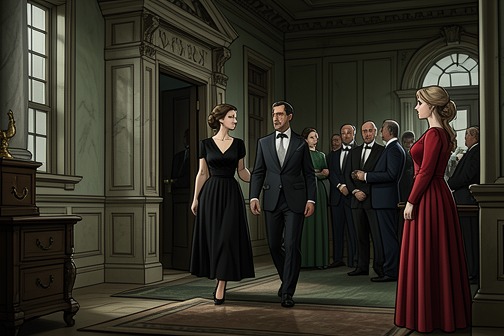
[Gu Family Gathering at the Old Residence](entity:event-recall-event-c608cc7bb3b0) is the scene in which [Shen Tang](entity:character-recall-character-304bad59fb17)’s marriage to [Gu Huaian](entity:character-recall-character-gu-huaian-d59baed269ab) is tested before the entire Gu family rather than merely maintained between the couple. What begins as an anticipated family dinner becomes a public ritual of recognition: elders, side branches, allies, and rivals watch Shen Tang enter the old residence beside Gu Huaian, while her manner of addressing the older generation and responding to [Zhou Qinglian](entity:character-recall-character-4054bf1581c4) determines whether she will be treated as an outsider, a convenient contract wife, or the woman occupying the position of Madam Gu.
## From Private Contract to Public Family Role
The gathering is significant because the marriage itself began as an arrangement with clearly transactional terms. Shen Tang had accepted a marriage agreement requiring only occasional family dinners and the appearance of an affectionate couple; in exchange, she would receive five million per month, have her living expenses charged to her husband’s card, and collect two hundred million when the two-year agreement ended in divorce. The old-residence gathering therefore places a private financial arrangement inside a much larger institution. The couple’s performance is no longer directed only at contractual compliance but at the Gu family’s hierarchy, reputation, and expectations.
[Tao Sister](entity:character-recall-character-52e5b8986aa6) warns Shen Tang that the visit is not an ordinary dinner. The whole Gu clan, including the Gu family’s side branches, will attend, making the event an examination by an extended kinship network rather than a casual meal. Tao Sister also reassures her that Gu Huaian is now the head of the Gu family, so the others will be the ones trying to flatter her; Shen Tang does not need to force conversation and may simply ignore anyone she does not wish to engage. This advice establishes the power structure before Shen Tang arrives: her protection comes not from sentimental certainty about the marriage, but from Gu Huaian’s standing and his decision to bring her into the family’s public space.
## Arrival at the Old Residence
When Shen Tang reaches the old residence, countless eyes turn toward her. Some are kind, some curious, and others openly unfriendly. The mixed reaction makes the entrance a visual contest: before Shen Tang speaks, the family is already classifying her according to the position she appears to occupy beside Gu Huaian. She responds by maintaining a smile and linking arms with him, converting the contractual couple’s required appearance into a deliberate public image of unity.
The first difficulty is linguistic and ceremonial. Shen Tang hesitates over how to address [Old Madam Gu](entity:character-recall-character-5f18b66f2d82) and [Old Master Gu](entity:character-recall-character-b2723ebde4ed). Calling them uncle would be inappropriate, but calling them father and mother risks overstepping if Old Master Gu refuses to accept her. She finally takes the cautious but intimate route and addresses them as “Dad, mom.” The choice is small, yet it reveals the pressure of family ritual: a title can signal distance, submission, acceptance, or a claim to belonging. Gu Huaian feels ashamed to look at her, suggesting that he recognizes how exposed she is and how much of the awkwardness has been created by the marriage arrangement he has asked her to perform.
Old Madam Gu answers warmly and confirms that the relationship is acceptable. Her attitude carries authority beyond personal courtesy because so many members of the family are present. The elders’ treatment of Shen Tang effectively determines how the other Gu family members will treat her. Old Madam Gu’s intimacy therefore functions as public sponsorship. After introducing Shen Tang to several important elders, she allows the younger generation to move on, having already established that Shen Tang is not to be casually dismissed.
## Zhou Qinglian’s Challenge
The gathering’s formal atmosphere does not prevent conflict; it merely changes conflict into controlled social pressure. Zhou Qinglian asks Shen Tang to step aside for a private conversation. Shen Tang refuses politely, saying that it is not convenient and inviting Zhou Qinglian to speak directly instead. This response denies Zhou Qinglian the secluded setting in which a fragile appeal or accusation might control the terms of the exchange. Shen Tang keeps the interaction in the visible space of the gathering, where Zhou Qinglian must bear responsibility for whatever she says.
Zhou Qinglian’s frown and appearance of fragility give the approach an emotional charge, while Zhou Yun’an, also known as Meow Meow, reacts by glaring angrily at Shen Tang and treating her refusal as evidence that she has bullied Zhou Qinglian. The accusation depends on a familiar social script in which vulnerability is presented as proof of innocence and resistance is recast as cruelty. Shen Tang does not answer with a serious defense. Instead, she imitates the script, clutching her chest and adopting a grief-stricken expression associated with Xizi Holding Her Heart. She apologizes for not realizing that refusing Zhou Qinglian’s request counted as bullying her.
The gesture is comic, but its function is precise. Shen Tang exposes the absurdity of equating refusal with abuse without openly escalating the confrontation. Zhou Yun’an is stunned and temporarily loses the ability to continue the accusation. Shen Tang realizes that she has found a way to handle Meow Meow: rather than accept the role of aggressor, she reflects the melodrama back at its source. The episode turns emotional performance into a defensive weapon, allowing Shen Tang to preserve dignity while making the charge collapse under its own exaggeration.
## Dissolution and Narrative Significance
The immediate conflict ends without a formal victory speech or family rupture. Zhou Yun’an asks Zhou Qinglian whether she has anything else to say; Zhou Qinglian denies having anything further and leaves. The storm dissipates almost as quickly as it formed. Shen Tang finds the result funny, then strokes the heads of the two younger children and thanks them for helping her. Her response prevents the encounter from leaving only hostility behind: even after defending herself, she resumes a controlled, almost affectionate social posture.
The gathering consequently establishes several changes at once. Shen Tang enters as a woman whose identity has been damaged by scandal and by the precarious conditions of her contract marriage. In her current life she is a Z-list celebrity known as an ever-trending source of scandals, burdened by online labels such as “loose tea bitch,” “plastic surgery freak,” “compensation scammer,” and “troublemaker.” Yet within the old residence she is not received solely through the entertainment industry’s hostile image. Gu Huaian’s arm, the elders’ welcome, and Old Madam Gu’s public intimacy give her a new social frame.
The event also illustrates the difference between appearance and meaning in Shen Tang and Gu Huaian’s relationship. Their marriage began with rules designed to minimize intimacy, but the family gathering requires them to appear as a loving couple in front of people who will interpret every gesture. The linked arms, the introductions, the parental titles, and the elder’s endorsement make the arrangement legible as a marriage even while its contractual origin remains concealed. The old residence thus becomes a stage on which a negotiated performance acquires social consequences that exceed the original agreement.
Finally, the gathering foreshadows the later question of what kind of marriage Shen Tang and Gu Huaian might ultimately possess. Much later, when someone asks when they plan to hold a wedding, Shen Tang admits that she does not know. She had once imagined walking down the aisle with someone she loved, but after transmigrating she married directly and skipped that ceremony. The old-residence gathering is not a wedding, yet it performs part of the same work: it places her before family witnesses and makes her belonging visible. Its unresolved quality preserves the central tension between a marriage that has been publicly enacted and a marriage whose emotional and ceremonial future remains uncertain.
Event 17
Shen Tang and Gu Huaian Define Their Romantic Relationship

[Shen Tang and Gu Huaian Define Their Romantic Relationship](entity:event-recall-event-b46792a3c487) is the turning point at which their relationship moves beyond the practical and performative terms of marriage into recognized romance. The change is initiated through a small but emotionally consequential request: [Gu Huaian](entity:character-recall-character-gu-huaian-d59baed269ab) asks [Shen Tang](entity:character-recall-character-304bad59fb17) to give him a title, and her acceptance transforms the uncertain bond between them into an acknowledged relationship with the language of boyfriend and girlfriend.
## From [Contractual Marriage](entity:state-recall-state-e19986e7b815) to Emotional Commitment
The relationship begins under a marriage agreement designed to minimize intimacy. Shen Tang is promised a monthly payment of five million, use of her husband’s card for living expenses, and a two-hundred-million settlement after the two-year agreement expires and they divorce. Her obligations are correspondingly limited: she is not required to fulfill wifely duties, but must appear occasionally at family dinners and maintain the image of a loving couple. This arrangement establishes marriage as a public role and financial exchange rather than an emotional commitment.
That background gives the later request for a romantic title its force. The relationship is not becoming meaningful because the legal or contractual terms have changed; it is becoming meaningful because the language surrounding it changes. A marriage that once depended on appearances begins to acquire a private emotional reality, and the title Gu Huaian seeks functions as a confirmation that he is no longer merely occupying the position assigned by the agreement.
## The Conversation and Its Misunderstanding
The decisive exchange occurs while Shen Tang and Gu Huaian are discussing his work. Gu Huaian says that he is almost finished and will be able to take time off to accompany her once the matter is over. Shen Tang answers playfully that she does not want him to accompany her, but Gu Huaian responds in a serious tone by asking whom she does want to accompany her. Her teasing therefore produces an unintended emotional gap: what she means lightly is received by him as a possible rejection.
The distance between them matters because Gu Huaian cannot read Shen Tang’s mind at that moment. His unusual ability to perceive her inner voice would ordinarily help him distinguish playful deflection from genuine refusal, but physical separation prevents him from doing so. Without a clear response from Shen Tang, he becomes insecure, despite being a business tycoon normally confident and capable in commercial battle. The scene therefore reverses their usual power arrangement. Gu Huaian may possess social authority and unusual access to Shen Tang’s thoughts, yet here he must ask directly for reassurance.
His unfinished address, calling her Tang, precedes the request that resolves the uncertainty. Gu Huaian asks whether she can give him a title. Shen Tang is moved by the slightly pathetic tone of the request and feels distressed by his vulnerability. She answers yes, and the answer is presented as something she hears herself say, emphasizing that her acceptance is spontaneous rather than a calculated response to the original contract.
## The New Language of the Relationship
The title changes the emotional status of the pair immediately. Both Shen Tang and Gu Huaian feel shy because their identities have changed. The awkwardness is not the awkwardness of strangers negotiating an arrangement; it is the embarrassment of two people who recognize that their familiar interactions now carry a new meaning. Their prior closeness can no longer be explained only through the roles of husband and wife maintained for public or family purposes.
Gu Huaian reacts with unrestrained joy and says that he wants to see Shen Tang immediately. Shen Tang answers that there is no need to hurry because they have plenty of days ahead of them. Her response both moderates his eagerness and reassures him about the future. She then teases him by addressing him as her boyfriend and asking whether he should now fulfill his boyfriend duties. The joke is important because it treats the new title as a lived relationship rather than a ceremonial label: Shen Tang immediately turns the newly recognized status into a source of playful expectations and mutual intimacy.
## Significance in the Larger Narrative
The event is a relationship-definition beat rather than a sudden meeting or an external crisis. Its action is verbal, but its consequence is structural. The couple’s bond moves from a contract whose central promise is eventual separation to a romance imagined as having days ahead of it. Shen Tang’s response does not erase the history of the agreement, yet it changes what that history means: the relationship that began as a way to secure money and manage appearances has developed into something Gu Huaian wants named and Shen Tang is willing to acknowledge.
The scene also clarifies the contrast between public performance and private feeling that surrounds both characters. Shen Tang has long been forced to manage appearances in the entertainment industry, where her company pairs her with male celebrities to exploit attention and where scandalous rumors continually define her public image. She can maintain a professional smile while fans and detractors fill a livestream with abuse, converting emotional composure into income and publicity. Against that background, calling Gu Huaian her boyfriend is not another imposed image manufactured by a public-relations team. It is a personal designation offered in response to his insecurity.
The event therefore establishes a new emotional baseline for later interactions. Gu Huaian is no longer waiting only for the contractual marriage to run its course, and Shen Tang is no longer treating the relationship solely as a profitable arrangement. His request for a title exposes his need for recognition; her acceptance answers that need; and her teasing about boyfriend duties confirms that the relationship has crossed from staged affection into reciprocal romantic play. The decisive shift lies not in a grand public declaration but in the moment when a name is requested, granted, and immediately used.
Event 18
Shen Tang Is Hired to Tutor and Discipline Zhou Jin

[Shen Tang Is Hired to Tutor and Discipline Zhou Jin](entity:event-recall-event-963b0a1b3d33) is an event in which a wealthy family turns [Shen Tang](entity:character-recall-character-304bad59fb17)’s forceful personality and prior familiarity with [Zhou Jin](entity:character-recall-character-zhou-jin-192ace7a08bd) into a formal tutoring arrangement. Madam Zhou offers Shen Tang twenty million to discipline her son, and Shen Tang accepts after initially preparing to refuse. The resulting month-long contract places a resistant heir under the supervision of a tutor who treats moral conduct—not merely academic performance—as the central subject.
## Causes and Background
Madam Zhou approaches Shen Tang with a favor rather than an ordinary educational request: she wants help disciplining her son. The request carries unusual urgency because Zhou Jin is the only son in his family, has been spoiled since childhood, and has rarely faced meaningful discipline. The one notable exception is his previous encounter with Shen Tang, which makes her a credible choice for a task that conventional tutoring has apparently failed to accomplish.
The offer is also explicitly transactional. Madam Zhou names a payment of twenty million, a sum large enough to change Shen Tang’s decision immediately. After drinking the rest of her red wine, Shen Tang agrees. The bargain therefore combines family authority, paid labor, and behavioral reform: Madam Zhou supplies the objective and the money, while Shen Tang supplies the discipline.
## The Assignment and Its Terms
Madam Zhou tells Zhou Jin that a home tutor has been found and that she will arrive soon. Shen Tang has separately agreed with Elder Sister Liang to come at her own convenience for one month. The arrangement is demanding, but Shen Tang is not intimidated by it. Its fixed duration gives the assignment a clear boundary: she is not being absorbed into the Zhou family permanently, and Zhou Jin is not being asked to submit to an indefinite new authority.
Shen Tang defines the work in deliberately broad terms. She brings out both a ruler and a first-grade textbook, then explains that Elder Sister Liang has asked her to tutor Zhou Jin in moral character and teach him how to become a decent human being. The props make the encounter almost theatrical: the ruler represents immediate correction, while the elementary textbook reduces the task to a symbolic return to the basics of conduct.
## First Confrontation
The assignment begins with Zhou Jin resisting the tutor before the lesson has even started. When Shen Tang arrives, the door is pulled open by Second Young Master Zhou, who is wearing only a white towel and is visibly annoyed. He asks why Tang Shenshen is there, revealing that the two already know one another and that her presence is unwelcome rather than unfamiliar.
Shen Tang answers by identifying her new role: she is his home tutor. Zhou Jin soon tests the limits of that role. While he plays on his phone, Shen Tang brings the ruler down with a slap. The gesture converts the negotiated employment arrangement into an immediate disciplinary confrontation, demonstrating that she intends to enforce attention rather than merely offer instruction.
Zhou Jin protests that he has had enough of the teacher-student performance and orders Shen Tang to leave. He threatens to tell his mother that she hit him, attempting to reverse the power relation by appealing to the very parent who hired her. Shen Tang does not retreat. Instead, she states the first condition of the arrangement: he must listen properly in class and cooperate fully.
## Cooperation and Consequences
The decisive leverage in the opening encounter is the promise of release. Shen Tang tells Zhou Jin that she will leave after one month and that he will then be free. Her authority is therefore both strict and limited; she does not claim permanent control over him, but she makes cooperation the price of reaching the end of the term.
Zhou Jin immediately checks the promise, asking whether she is certain she will leave after a month. His response marks the first shift in the event. He begins in defiance, treating the tutoring as an intolerable charade, but the clearly stated deadline gives him a condition he can understand. The assignment has not yet transformed his character, but it has established a workable basis for continued discipline: Shen Tang will enforce the lessons, and Zhou Jin will have a defined endpoint to endure.
## Narrative Significance
The event turns a private family problem into a structured relation of paid discipline. It places Shen Tang in an unusual professional role, not as a performer managing public opinion or as a participant in entertainment work, but as an authority responsible for another person’s conduct. The ruler, first-grade textbook, and one-month limit make the arrangement concrete, while the twenty-million fee exposes the economic power behind the request.
It also reverses the expected hierarchy between a privileged young heir and an outsider hired to instruct him. Zhou Jin possesses family status and parental protection, yet Shen Tang controls the immediate scene through her willingness to impose consequences. Her method is blunt, physical, and openly corrective, but it is bounded by a stated term rather than presented as unlimited domination. The event’s importance lies in that tension: discipline begins as a commercial service, becomes a contest of wills, and ends its opening movement with Zhou Jin’s reluctant acceptance that Shen Tang’s authority will last for one month.
Event 19
Anran and Wuyang Appear on a Live Reality Show
[Anran and Wuyang Appear on a Live Reality Show](entity:event-recall-event-9876eb5fef31) is the turning point that moves [Shen Tang](entity:character-recall-character-304bad59fb17)’s participation in a children’s variety program from a controlled recording environment into an unpredictable public performance. The decision places [Gu Anran and Gu Wuyang](entity:relation-recall-relation-a6de1e4d5334)’s unfiltered childhood reactions at the center of the broadcast, while making Shen Tang responsible for guiding them without manufacturing a false image. What begins as a question of professional risk becomes a successful family-facing appearance that restores Shen Tang’s popularity and gives her a new public identity.
## From Recorded Program to Live Broadcast
[Pei Kesong](entity:character-recall-character-dc9f03e3c66f) initiates the decision by reminding Shen Tang that the contract she had previously signed concerned an upcoming children’s variety show, but that the format had changed. Instead of being pre-recorded, the program would now be broadcast live. The change matters because recording normally gives adults room to perform roles, repeat scenes, or manage mistakes before the audience sees them. Children, by contrast, do not understand pretense in the same way and tend to speak their minds. Shen Tang also recognizes that online viewers would overanalyze every unscripted remark, making even an innocent exchange capable of creating trouble.
The new format therefore changes the value at stake from ordinary publicity to exposure. Shen Tang trusts Gu Anran and Gu Wuyang, but she does not want to expose them—or herself—to unnecessary danger merely for the sake of appearing on television. Rather than accepting immediately, she says that she must discuss the proposal with them before deciding. Her hesitation is not a rejection of the opportunity; it is an insistence that the children’s participation cannot be treated as an adult business decision made without them.
## Consent and Preparation
Gu Qing’an responds in an unusually open-minded manner. After Shen Tang explains the proposed livestream, Gu Qing’an says that the children are old enough to make their own decisions and that she will not interfere. Shen Tang then asks Gu Anran and Gu Wuyang directly whether they want to participate. They look at each other and eagerly agree in unison. Shen Tang also explains that unexpected situations may occur because the show is live, checking whether they still accept the risks rather than relying only on their initial excitement.
Gu Wuyang answers with the confidence of a little adult, insisting that he will become the most popular child on the program. Shen Tang encourages that confidence, and the decision is finalized. The children have already watched earlier episodes, so they understand something about the show’s flow and become excited about joining it. [Gu Anran](entity:character-recall-character-7f6addebbd5c) immediately begins thinking about presentation, asking to buy a pretty dress. The children’s enthusiasm supplies the positive charge that Shen Tang’s caution had temporarily held back: the program becomes not merely a commercial assignment, but an experience they actively choose.
Shen Tang and the children agree beforehand to act normally. This agreement becomes the guiding principle of the appearance. Shen Tang does not attempt to script every movement or turn the children into decorative props. At the same time, she does not simply withdraw and let them do whatever they want. She selectively gives them responsibilities, including packing their own luggage, so that participation becomes practical experience rather than a staged display of cuteness. Her role is consequently neither strict controller nor passive companion; she manages the conditions while preserving the children’s agency.
## The First Livestream Morning
The filming date arrives only a few days after the decision, and the crew comes extraordinarily early, at five in the morning, apparently hoping to capture the household before it has been prepared for the cameras. Shen Tang and the children are still asleep when the crew arrives. The delay creates an immediate contrast between the conventions of celebrity programming and the reality of family life. Viewers watching the livestream react with relief that the household is not already awake with professional makeup and artificial composure. The early hour makes the broadcast feel ordinary and credible precisely because the participants have not been polished into readiness.
The three finally come downstairs at eight. By then, the crew has already eaten the breakfast prepared by [Tao Sister](entity:character-recall-character-52e5b8986aa6), while the livestream audience is still bleary-eyed from watching. Shen Tang simply smiles and greets the viewers with a good morning. Gu Anran and Gu Wuyang wear matching outfits, and standing together they resemble a pair of toy dolls, immediately producing an affectionate response from the audience. The scene combines managed presentation—the matching clothes and a prepared household—with spontaneous appeal, since the broadcast’s charm depends on how naturally the children occupy that setting.
The livestream also demonstrates how Shen Tang’s approach differs from the scandal-centered image that had previously followed her. She does not need to perform outrage, romance, or innocence for the camera. Her public task is quieter: she moderates the children’s participation, allows them to act for themselves, and maintains a stable atmosphere in which their personalities can be seen. The broadcast turns domestic coordination into visible emotional labor, but it also gives that labor a concrete result: viewers respond to the children and to Shen Tang’s composed care rather than to manufactured controversy.
## Public Response and Career Revival
The appearance proceeds smoothly from Shen Tang’s perspective, and Gu Anran and Gu Wuyang attract a substantial following among auntie fans. Their appeal rests on more than appearance. They are described as exceptionally attractive, well behaved, and intelligent, qualities that make the audience treat them as unusually compelling young personalities. Their popularity also produces a darker indication of the attention economy surrounding the show: many viewers become so invested in them that they express a desire to kidnap them. The children’s success therefore brings affection and visibility, but also confirms why Shen Tang had considered the risks of live exposure so carefully.
The most immediate consequence falls on Shen Tang. Because she brings the children to participate in the variety show, she becomes popular again. The children’s repeated habit of calling her “sister” leads the public to give her the title of “national sister.” This is a striking reversal of her earlier position as a Z-list celebrity and an “ever-trending queen of scandals,” whose company had paired her with male celebrities to exploit attention while the industry treated her as someone to avoid. The same public mechanism that once converted hostility into rumor now converts her ordinary interactions with the children into a sympathetic and commercially valuable image.
The reversal also reframes Shen Tang’s relationship with publicity. Earlier, [Wang Brother](entity:character-recall-character-wang-brother-f1622ba9e736) had argued that bad publicity was still publicity and that being slandered was less frightening than being unknown. Shen Tang had wanted to quit the entertainment business, seeing no reason to struggle toward a success she believed was not destined for her. The livestream gives that old argument an unexpected answer. She does not regain popularity by embracing scandal or by forcing herself into a romantic pairing arranged by a company public-relations team. She gains it through an unscripted association with Gu Anran and Gu Wuyang, through visible patience, and through a form of public conduct that viewers interpret as genuine.
## Significance and Aftermath
The event’s decisive shift is from controlled representation to shared immediacy. The program’s conversion to livestreaming removes the protective distance of editing, while the children’s directness makes them resistant to the polished performance expected of adult celebrities. Shen Tang responds by replacing total control with selective guidance. She prepares the children for possible trouble, obtains their agreement, lets them pack their own luggage, and allows their ordinary behavior to remain visible. The broadcast succeeds because it does not eliminate risk; it makes natural behavior the basis of the performance.
The aftermath extends beyond ratings or a temporary appearance. Gu Anran and Gu Wuyang become popular in their own right, and Shen Tang’s new “national sister” identity gives her a renewed place in public culture. She also finds herself loving the children deeply and feeling an urge to have a child again. That response reveals the event’s private consequence: the livestream does not merely repair her career image. It awakens a maternal longing, tying the public success of the program to a change in Shen Tang’s personal emotional horizon. The children’s candid presence thus transforms a potentially dangerous publicity experiment into a renewed career, a shared family experience, and an altered sense of what Shen Tang may want from the future.